The Great Ocean Road is one of Victoria's great journeys, but the full self-drive route is long, tiring, and logistically tricky for a group of friends who want to share the experience without taking turns at the wheel. A small-group day tour from Melbourne lets you cover the genuine highlights — the Memorial Arch, Lorne, Apollo Bay, and the Twelve Apostles — in a single day, with someone else handling the winding coastal road. This guide is honest about the hours involved and helps you decide whether a day taster is right for your group.
Why a Day Tour Makes More Sense Than a Self-Drive for a Group
The Great Ocean Road stretches roughly 243 kilometres from Torquay to Allansford, and the full return drive from Melbourne in a single day would leave most people exhausted before the Twelve Apostles even came into view. For a group of friends — particularly when no one particularly wants to be the designated driver on a road that twists and climbs for hours — handing the wheel to a professional guide is a straightforward decision. You pay for the convenience, and you get back the energy to actually enjoy what you are looking at.
There is also the matter of parking. At major stops like the Twelve Apostles and Lorne foreshore, car parks fill early in the day, especially during school holidays and long weekends. Tour coaches have dedicated access arrangements that sidestep the usual scramble. For a group travelling together, the cost per person on a small-group tour often compares favourably to petrol, parking, and the wear of a long drive split between friends.
The social dimension matters too. Sitting together on a comfortable coach, with a knowledgeable guide narrating the landscape and history, is a different experience from navigating in convoy or rotating drivers. Conversations happen more naturally. The road does not demand anyone's attention. For a group of women travelling together, that shared ease is part of the point of the day.
What Is a Realistic Day Taster of the Great Ocean Road?
A well-structured day tour from Melbourne typically covers four anchor stops: the Memorial Arch at Eastern View (the ceremonial gateway to the road, built by returned soldiers after World War One), the seaside town of Lorne for a comfort break and lunch, Apollo Bay for a shorter stop with ocean views, and the Twelve Apostles limestone stacks in Port Campbell National Park. Some tours also include a brief stop at the Gibson Steps, where you can descend to the beach and look up at the apostles from sea level — worth knowing about if your knees are comfortable on stairs.
The honest picture is that this is a long day. Most Melbourne pick-ups start between 7am and 8am, and return to the city is typically between 8pm and 9:30pm. That is twelve to fourteen hours door to door, with perhaps five to six hours of actual travel time in the coach across the day. The reward is that you cover ground that would take two or three days to do comfortably by car. For a one-off taster with friends, the trade-off is reasonable — but go in knowing it, and plan accordingly.
Smaller group tours (usually capped at around twelve to twenty people) tend to feel more relaxed than large coach tours. Stops are slightly more flexible, the guide can respond to the group's energy, and there is less time spent waiting for everyone to reboard. If your group values a quieter pace, filtering for 'small group' when you search is worth doing.
The Memorial Arch to Lorne: The First Half of the Road
The Memorial Arch at Eastern View is usually the first stop after leaving Geelong, and it sets the tone for the day. The arch is simple and dignified — a stone gateway that marks the beginning of the road that returned servicemen built between 1919 and 1932. Most tours stop briefly here for photographs and a short explanation of the road's history. The ground is flat and accessible, and it takes only a few minutes, which is about right before the road begins in earnest.
From the arch, the road hugs the coastline through Anglesea and Aireys Inlet — both pleasant towns worth a longer visit on a future trip. Lorne is the first substantial stop, and it is a good one. The main street has cafes, bakeries, and a supermarket if anyone needs supplies. The foreshore is flat and easy to walk along. Lunch in Lorne is standard on most tours, either at a pre-arranged venue or with free time to choose your own. Give yourself at least an hour here — it is one of the most pleasant towns on the road and worth sitting in for a moment rather than rushing through.
The stretch of road between Lorne and Apollo Bay is the most dramatic and the most demanding for a driver — steep, winding, and spectacular. As a passenger, you can simply watch the ocean appear and disappear through the coastal scrub. This section takes roughly an hour and is where many people feel most grateful not to be behind the wheel.
Apollo Bay and the Turn Inland: What to Expect at the Midpoint
Apollo Bay is a working fishing town with a relaxed character quite different from Lorne's slightly boutique atmosphere. The harbour is functional and photogenic, and on most tours the stop here is shorter — perhaps twenty to thirty minutes for a walk along the foreshore or a coffee. It is a good moment to stretch legs and get some sea air before the tour turns inland through the Otway Ranges toward the apostles.
The inland section through the Otways is where wildlife becomes a possibility. Koalas sleep in manna gums along Beech Forest Road and the surrounding area, and some smaller tour operators build in a dedicated wildlife stop here. If that is a priority for your group, look specifically for tours that include an Otways wildlife component — not all of them do. The rainforest sections of the Otways are cool and green, a pleasing contrast to the open coast.
After the Otways, the landscape opens out into the flat pastoral country of the Shipwreck Coast. The light changes, the vegetation drops away, and suddenly the limestone cliffs of Port Campbell National Park appear on the horizon. It is a landscape that earns its reputation without any assistance from superlatives.
The Twelve Apostles: What You Actually See and How to Move Around
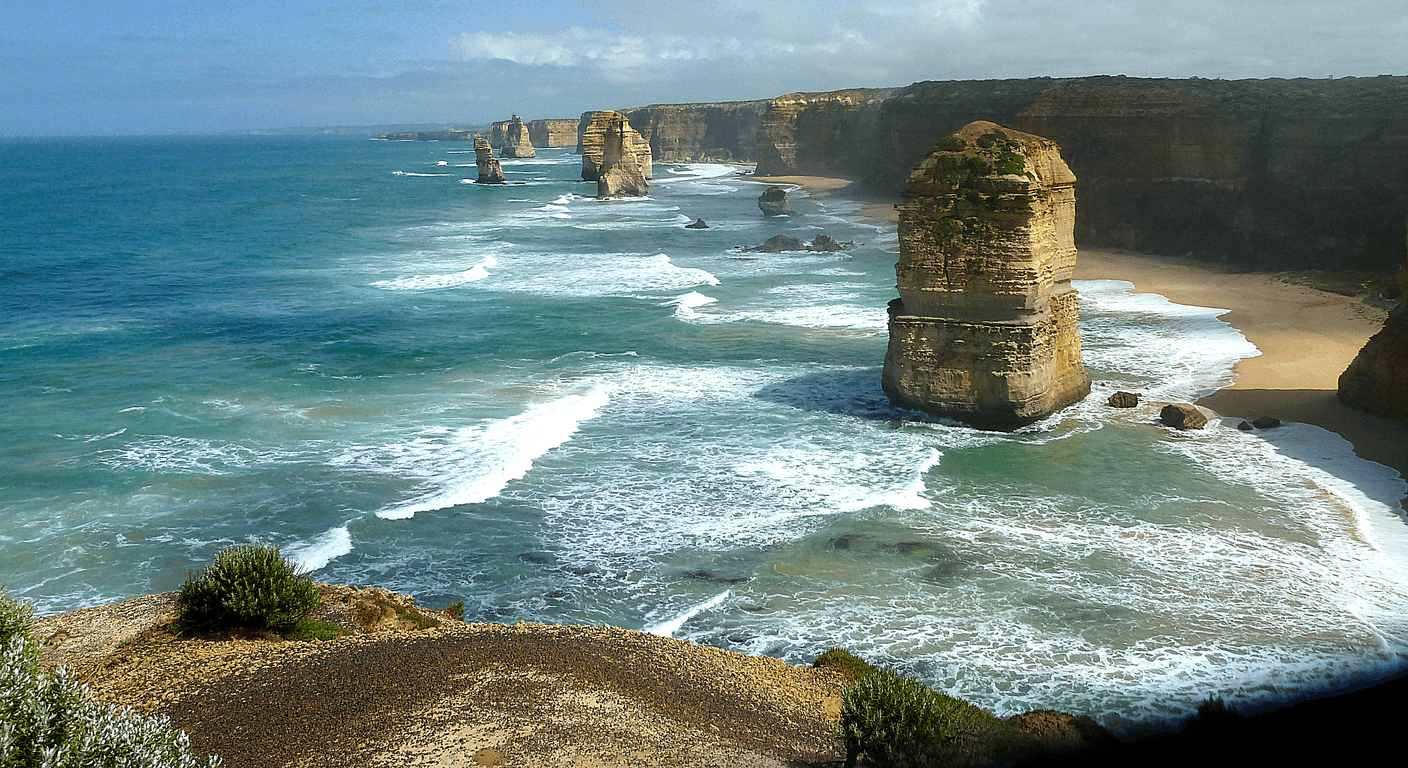
The Twelve Apostles Marine National Park visitor precinct is well designed for people who want a genuine experience without a punishing walk. The main viewing platform is reached via a short tunnel under the road from the car park — flat, well-lit, and accessible. From the platform, you look west along the cliff line at the remaining limestone stacks rising from the Southern Ocean. There are currently eight stacks visible from this viewpoint; the name 'Twelve Apostles' was a marketing convenience adopted in the 1960s and the number has never been accurate.
If your group is comfortable on stairs, the Gibson Steps are about a five-minute drive west of the main precinct and offer a completely different perspective. Around eighty steps take you down to the beach, where you stand at the base of the cliffs and look up at the stacks from sea level. The steps are steep and uneven in places, and the return climb is more demanding than the descent. It is worth being honest with yourself about whether your knees and hips are up to it on a day when you have already been travelling for seven or eight hours.
Sunset at the Twelve Apostles is genuinely worth timing for. The light turns the limestone orange and the ocean silver, and it is one of those moments that justifies the early start. Many tours are timed to reach the apostles in the late afternoon precisely for this reason. Check the departure time and ask the operator when they expect to arrive at the apostles — it is a reasonable question and a good operator will have a clear answer.
Pacing, Comfort, and What to Pack for a Long Day
A fourteen-hour day is a long day by any measure, and the question of pacing is worth thinking through before you go. Wear comfortable, layered clothing — the coast can be cool and windy even in summer, and the Otways are genuinely cold in winter. Good walking shoes matter more than anything else; you will be on gravel paths, clifftop boardwalks, and beach steps at various points. A small daypack with water, snacks, a light waterproof layer, sunscreen, and any medication you take during the day covers the essentials.
Most reputable tour operators include comfort stops roughly every two hours, but if you have specific needs — a medical condition, a preference for more frequent breaks, or mobility considerations — it is worth calling the operator before you book rather than assuming. Ask directly: how many steps are there at the Gibson Steps, is the main apostles viewing platform wheelchair accessible, are there toilet facilities at each stop. Good operators field these questions regularly and will give you straight answers.
If anyone in your group has significant mobility limitations, the main Twelve Apostles viewing platform and Lorne foreshore are accessible without stairs. The Gibson Steps and some of the clifftop lookouts between Lorne and Apollo Bay are not. A day tour can still be a very worthwhile experience with these limitations — you simply choose your stops accordingly and do not feel obliged to attempt every option on the itinerary.
Choosing the Right Tour for Your Group: What to Look For
The most important distinction when comparing tours is group size. Large coach tours can carry forty or fifty passengers and feel more impersonal, with tighter stop schedules and less flexibility. Small-group tours — typically capped at twelve to twenty people — move more nimbly and often feel more like travelling with a knowledgeable friend than being processed through a tourist itinerary. For a group of friends who already have their own dynamic, a smaller tour tends to integrate more naturally.
Inclusions vary considerably between operators. Some tours include lunch, morning tea, and entry fees for any paid attractions. Others are seat-only, with meals and entries at your own cost. When comparing indicative prices — which currently sit roughly in the $160–$280 per person range depending on operator and inclusions, though you should confirm all current pricing directly — factor in what is covered. A tour that appears cheaper may require you to pay separately for lunch and any park entry fees.
Reading recent reviews from travellers in a similar age group is useful, particularly comments about the guide's knowledge and manner, the comfort of the vehicle, and how the operator handles the pace of the day. Visit Victoria's website at visitvictoria.com maintains a directory of licensed tour operators and is a reliable starting point for finding accredited options. Booking directly with the operator is generally preferable to third-party platforms, as you can ask questions and confirm accessibility requirements before committing.
Key takeaways
- A small-group day tour from Melbourne lets you see the Great Ocean Road's main highlights — Memorial Arch, Lorne, Apollo Bay, and the Twelve Apostles — without any of your group needing to drive.
- Expect a twelve-to-fourteen-hour day door to door; most Melbourne pick-ups start between 7am and 8am and return by around 9pm.
- The main Twelve Apostles viewing platform is accessible without stairs; the Gibson Steps involve roughly eighty uneven steps and a steep return climb.
- Indicative tour costs range from roughly $160 to $280 per person depending on group size, inclusions, and operator — always confirm current pricing directly before booking.
- Small-group tours capped at twelve to twenty people tend to offer more flexibility, a better pace, and a more personal experience than large coach tours.
- The Otways section between Apollo Bay and Port Campbell is where koalas and rainforest appear — if wildlife is a priority, look specifically for tours that include an Otways wildlife stop.
Where to look and book
Indicative prices only — always confirm with the operator before booking.
Frequently asked questions
Can you see the Great Ocean Road highlights in one day from Melbourne?
Yes, it is possible to see the main highlights — the Memorial Arch, Lorne, Apollo Bay, and the Twelve Apostles — in a single day from Melbourne on a guided tour. The day is long, typically twelve to fourteen hours door to door, and the experience is a taster rather than a leisurely exploration. For many over-60 travellers, particularly those travelling as a group, a guided day tour is the most practical and enjoyable way to do it.
Is the Twelve Apostles viewing platform accessible for people with mobility limitations?
The main Twelve Apostles viewing platform at Port Campbell National Park is reached via a flat, accessible tunnel under the road from the car park and is generally suitable for people who do not manage stairs well. The Gibson Steps, which offer a beach-level view of the stacks, involve around eighty steep and uneven steps with a demanding return climb and are not suitable for everyone. Confirm current accessibility details with Parks Victoria at parks.vic.gov.au before your visit.
How much does a Great Ocean Road day tour from Melbourne cost?
Indicative pricing for small-group Great Ocean Road day tours from Melbourne currently sits roughly in the $160–$280 per person range, depending on the operator, group size limit, and what is included (meals, park entry fees, and so on). These figures are indicative only and subject to change — always confirm current pricing directly with the tour operator before booking.
What is the difference between a small-group tour and a large coach tour on the Great Ocean Road?
Small-group tours are typically capped at twelve to twenty passengers and tend to offer more flexible pacing, a more personal guide relationship, and easier boarding and alighting at each stop. Large coach tours can carry forty or more passengers and generally follow a tighter schedule with less room to linger. For a group of friends who want to enjoy the day together at a relaxed pace, a small-group tour is usually the better fit.
What should you wear and bring on a Great Ocean Road day tour?
Comfortable, layered clothing is recommended, as the coast can be cool and windy regardless of the season and the Otways are often cold. Sturdy walking shoes are more useful than anything fashionable. A small daypack with water, snacks, sunscreen, a light waterproof jacket, and any daily medication covers the practical essentials for a long day out.
Got a tip, a price update or a story from this route? The community would love to hear it.
Share your views on our Facebook page— Seniors and Solo Traveller Stories
More day trips
Mornington Peninsula Hot Springs: A Gentle Wellness Day for the Over-60s
The Mornington Peninsula has long drawn Melbourne day-trippers for its wineries and beaches, but the hot springs at Fi…
Daylesford and Hepburn Springs: Victoria's Spa-Country Day Out
Daylesford and Hepburn Springs sit about 115 kilometres north-west of Melbourne in the Central Highlands, and together…

Ballarat in a Day by Rail: A Solo Traveller's Gentle Plan for Gold, Gardens and a Warm Lunch
Ballarat is an easy V/Line day trip from Melbourne with a flat, walkable town centre, good cafes and Sovereign Hill. A…