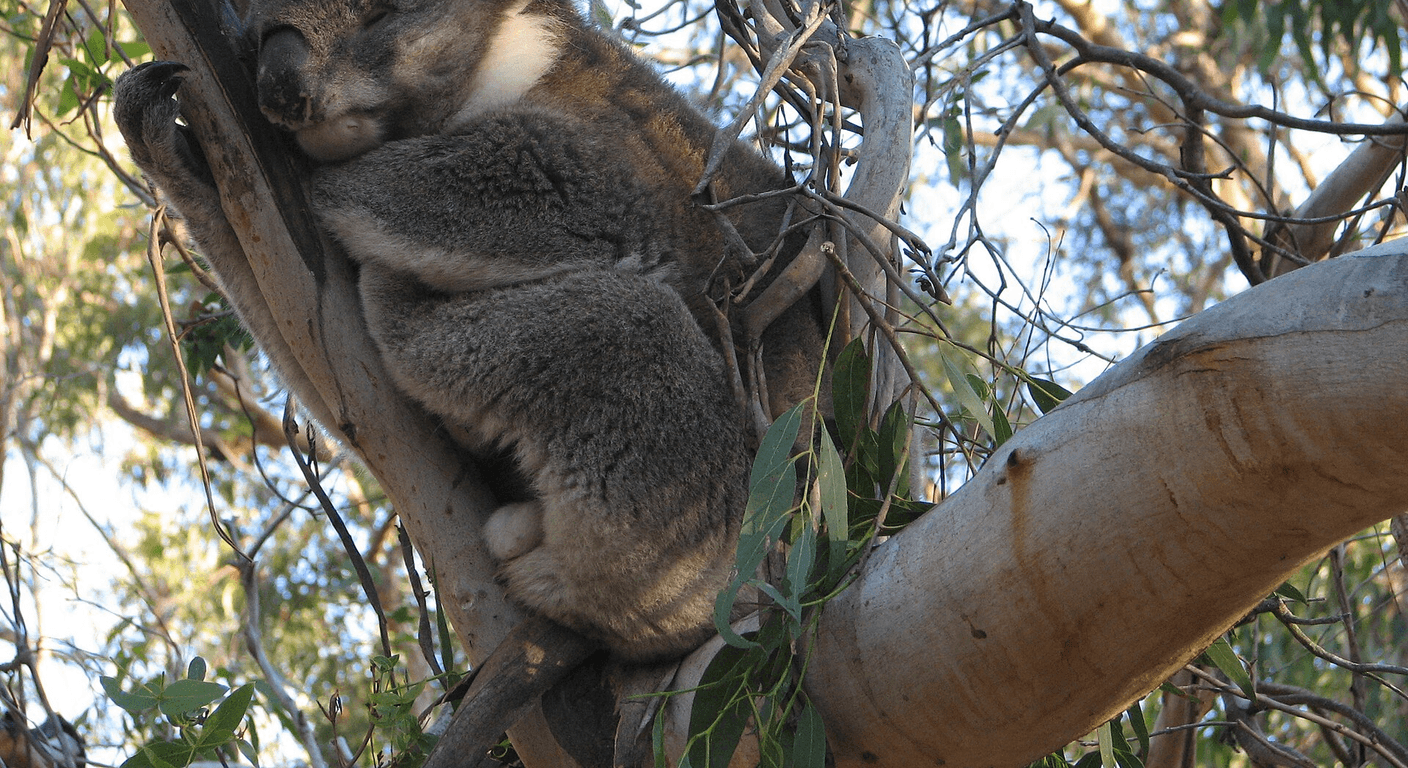
Phillip Island is far more than its famous evening penguin parade. A well-paced day on the island takes in koalas in the treetops, a rugged cape, a seal colony viewed from clifftops, and a wildlife coast that rewards slow, careful looking. This guide is written for travellers aged 60 and over who want to make a full, unhurried day of it — with or without a car.
Why Phillip Island deserves a whole day, not just an evening
Most visitors arrive in the late afternoon, watch the penguin parade, and leave. That means the island's daytime world — koalas dozing in manna gums, a seal colony that numbers in the thousands, a volcanic cape with layered basalt and pink granite, and a coastline that stretches in both directions without a crowd — goes almost unnoticed. For a traveller who enjoys nature at a considered pace, arriving early and staying for the parade is the better choice by a wide margin.
The island sits roughly 140 kilometres south-east of Melbourne, connected to the mainland at San Remo by a bridge. The drive from the city takes around 90 minutes without stops. But driving is not the only option, and for those who prefer not to navigate unfamiliar roads, there are alternatives worth knowing about. The four main daytime stops — the Koala Conservation Reserve at Fiveways, the Nobbies and Blowhole, Cape Woolamai, and the wildlife coast around Summerlands — can be visited in a sensible loop that ends at the penguin parade at dusk.
Phillip Island Nature Parks manages most of the key sites under one organisation, which means a single multi-attraction pass covers the Koala Conservation Reserve, the Nobbies Centre, and the Penguin Parade. For travellers holding a Commonwealth Seniors Health Card, a Victorian Seniors Card, or a pension concession card, discounted entry rates apply. Confirm current concession pricing directly at penguins.org.au before you go, as rates are updated seasonally.
Getting there: V/Line, tour, or self-drive — what works for older travellers?
Driving is the most flexible option and suits couples who are comfortable on country roads. The Monash Freeway to the South Gippsland Highway is straightforward, and parking at each site is generally easy outside school holidays. Fuel up before crossing the bridge — petrol on the island can be slightly dearer than on the mainland.
For those who prefer not to drive, the practical public transport route involves a V/Line train from Southern Cross Station to Koo Wee Rup or Dandenong, then a connecting bus service through to Cowes. The journey takes around two to two-and-a-half hours each way and requires some planning around timetables, which do not run as frequently as city services. Check the PTV journey planner at ptv.vic.gov.au and confirm bus connections in advance. A myki concession card applies to the bus legs and reduces the fare. This route suits independent travellers who are comfortable with transfers and do not need to carry heavy luggage.
A guided day tour from Melbourne is the most comfortable option for travellers who want everything arranged. Several operators run small-group tours that include transport, entry to the Koala Conservation Reserve, the Nobbies, and the penguin parade, often with a dinner stop in Cowes. Look for operators listed through Visit Victoria at visitvictoria.com and check whether the tour uses step-free vehicles or coaches with good boarding access. Tour prices vary — allow roughly $150–$220 per person as an indicative range, but confirm current pricing with each operator directly.
The Koala Conservation Reserve: boardwalks and treetops at your own pace
The Koala Conservation Reserve near Fiveways is a genuine highlight and an excellent first stop of the day, when the light is soft and the animals are still visible before midday heat sends them deeper into the canopy. Koalas are wild here — they are not in enclosures — but the elevated boardwalk system means you are often looking at them at eye level or just above, which is far more intimate than looking up from the ground.
The boardwalk circuit is around 1.2 kilometres and is sealed and level for the most part. It is suitable for walkers who are steady on their feet and comfortable on wooden decking. There are sections where tree roots have created minor undulations in older parts of the path, so sensible footwear matters. Wheelchairs and mobility aids can navigate the main loop, though some of the shorter spur tracks are less even. If mobility is a consideration, contact Phillip Island Nature Parks directly at penguins.org.au before your visit to confirm current track conditions.
Allow at least 45 minutes here, more if you are a patient watcher. Koalas sleep up to 22 hours a day, so the experience is not about action — it is about learning to look closely at the forks and hollows of eucalyptus trees until a grey shape resolves into a sleeping animal. Staff and volunteers are usually present on weekends and can point you toward the most active areas. Entry is included in the multi-attraction pass or available separately; concession rates apply.
The Nobbies and the seal colony: what to expect at the western tip
The Nobbies headland sits at the western tip of the island and is among the most dramatic pieces of coastal scenery in Victoria's Bass Coast. The Nobbies Centre is the visitor building here, with a café, indoor exhibits about the seal colony, and a covered viewing area. Just offshore — visible clearly with binoculars or through the centre's telescopes — lies Seal Rocks, home to the largest Australian fur seal colony in the world. Numbers reach into the tens of thousands during the breeding season in late spring and summer.
The boardwalk from the Nobbies Centre to the viewing platforms is fully sealed and accessible, with wind shelter at key points. On a clear day the views extend to Cape Woolamai to the east and, on very clear days, to Wilson's Promontory to the south-east. The blowhole below the headland is active in rough seas; in calmer conditions it is less dramatic but the rock formations around it are worth the short walk to see. The path to the blowhole viewing area involves some steps — check current access conditions at the centre on arrival.
The Nobbies Centre itself is a good place to pause for coffee and lunch. The café is modest but reliable, and the indoor exhibits are genuinely informative about the seal biology and the island's marine environment. This is a good midday stop — sheltered, not too physically demanding, and with enough to occupy an hour without rushing.
Cape Woolamai: the island's wild eastern edge
Cape Woolamai is the highest point on Phillip Island and a protected state faunal reserve managed by Parks Victoria. The cape is made of pink granite and grey basalt, and the contrast between the pale rock, the dark water, and the bleached ti-tree heath gives it a quality quite different from the rest of the island. It is also a significant habitat for short-tailed shearwaters — muttonbirds — which nest in burrows across the headland in their hundreds of thousands from September through April.
The full Cape Woolamai walking track circuit is around 5.5 kilometres and involves some steep sections, including a climb to the Pinnacles lookout. This is not a circuit suited to all mobility levels and should be assessed honestly. The shorter walk to Woolamai Beach from the main car park is far more accessible — it is a flat, well-defined path to a long surf beach that is impressive in its own right. The beach is not patrolled and swimming is not recommended, but walking the sand with the Southern Ocean running in is a satisfying experience.
For travellers who want a manageable middle ground, the walk to the first lookout above the beach takes around 20 minutes return and involves a moderate incline on a clear track. Wear sturdy shoes and bring a windproof layer — the cape is exposed and the wind off Bass Strait can be cold even on a warm day. Check Parks Victoria at parks.vic.gov.au for current track notes and conditions before your visit.
The wildlife coast between stops: what else you might see
The stretch of coast between Rhyll and Cowes on the island's north side is a sheltered tidal flat habitat that supports wading birds — pied oystercatchers, little egrets, royal spoonbills — particularly at low tide. If your route takes you through Rhyll, a short stop at the Rhyll Inlet is worth ten minutes of quiet watching. There are no facilities here but the road runs close to the water and the viewing is easy from the roadside or a short flat walk.
Wallabies and swamp wallabies are common across the island and are often visible in the late afternoon in grassy areas near the Koala Conservation Reserve and around the Summerlands precinct. They are wild animals and generally unbothered by people who move quietly. The island also supports wedge-tailed eagles, white-bellied sea eagles, and peregrine falcons — all of which can be seen from the clifftop walks if you are patient and have binoculars.
Cowes, the island's main town, is a practical lunch or afternoon tea stop. The main street has cafés, a bakery, and a small supermarket. Churchill Island Heritage Farm, connected to Phillip Island by a bridge from Newhaven, is a gentle addition for travellers who enjoy heritage working farms — it is flat, picturesque, and included in some multi-attraction passes. Confirm inclusion at penguins.org.au.
Ending the day: the Penguin Parade at dusk
The penguin parade at Summerlands Beach is the island's most visited attraction for good reason. Little penguins — the world's smallest penguin species — return from the sea to their burrows at dusk every evening of the year, and the sight of them crossing the beach in small groups, unhurried and utterly indifferent to the watching crowd, is genuinely moving rather than theatrical. The parade time shifts with the season, so check the official time on the night of your visit at penguins.org.au.
The viewing area has tiered seating as well as a boardwalk that runs through the dune habitat. The standard viewing areas involve some walking on sand and gravel paths; the Penguins Plus experience offers closer viewing with fewer people and reserved seating. For travellers with limited mobility, the accessible viewing platform near the main grandstand provides a good sightline without stairs. Blankets and warm layers are strongly recommended regardless of the time of year — temperatures drop sharply after sunset, even in summer, and the wait can be chilly.
No photography is permitted during the parade — flashes disorient the penguins — and the rule is enforced. This is not a hardship; it means the experience is entirely present and unmediated by screens. The car park fills early, so arriving at least 45 minutes before the listed parade time is sensible. If you are on a tour, your guide will manage the logistics. If you are self-driving, the on-site staff direct traffic efficiently.
Key takeaways
- A multi-attraction pass from Phillip Island Nature Parks covers the Koala Conservation Reserve, the Nobbies, and the Penguin Parade, with concession rates available for eligible cardholders.
- The Koala Conservation Reserve boardwalk is around 1.2 kilometres, largely level and sealed, making it one of the more accessible wildlife walks on the island.
- The Nobbies boardwalk to seal-colony viewing platforms is fully sealed and wind-sheltered, suitable for travellers with mobility considerations.
- Cape Woolamai's full circuit is steep and long, but the short walk to Woolamai Beach from the car park is flat and accessible for most fitness levels.
- Public transport to Phillip Island is possible via V/Line train and connecting bus, but requires advance timetable planning — guided day tours are the more comfortable alternative for those who prefer not to self-drive.
- The penguin parade runs every evening of the year, with accessible viewing platforms available and strict no-photography rules that make the experience more intimate, not less.
Where to look and book
Indicative prices only — always confirm with the operator before booking.
Frequently asked questions
Is there a seniors or concession discount for Phillip Island Nature Parks attractions?
Yes. Phillip Island Nature Parks offers concession pricing for the Koala Conservation Reserve, the Nobbies Centre, and the Penguin Parade. Eligible cards typically include the Commonwealth Seniors Health Card, Victorian Seniors Card, and pension concession cards. Confirm current concession rates and which cards are accepted directly at penguins.org.au before you visit, as pricing is updated seasonally.
How accessible is the Koala Conservation Reserve boardwalk for older travellers?
The main boardwalk loop at the Koala Conservation Reserve is around 1.2 kilometres and is largely sealed and level, making it manageable for most older travellers. Wheelchairs and walking frames can navigate the main circuit, though some spur tracks are less even. Contact Phillip Island Nature Parks at penguins.org.au to confirm current track conditions if mobility is a specific concern.
Can you get to Phillip Island without a car?
Yes, though it requires planning. The public transport option involves a V/Line train from Southern Cross Station followed by a connecting bus to Cowes; check timetables at ptv.vic.gov.au and vline.com.au well in advance as services are infrequent. Guided day tours from Melbourne are a more comfortable alternative and typically include transport, site entry, and the penguin parade — look for operators listed through visitvictoria.com.
What time does the penguin parade start?
The penguin parade starts at dusk, and the exact time changes every day of the year as sunset shifts with the seasons. Check the official parade time for your specific visit date at penguins.org.au. Arrive at least 45 minutes before the listed time to park, collect tickets, and settle into the viewing area.
Is Cape Woolamai suitable for older walkers?
The full Cape Woolamai circuit (around 5.5 kilometres with steep sections to the Pinnacles) is demanding and not suited to all fitness levels. However, the shorter walk from the main car park to Woolamai Beach is flat and accessible for most older travellers. Check current track conditions at parks.vic.gov.au before your visit and wear sturdy, closed-toe shoes — the cape is exposed and the ground can be uneven.
Got a tip, a price update or a story from this route? The community would love to hear it.
Share your views on our Facebook page— Seniors and Solo Traveller Stories
More day trips
Mornington Peninsula Hot Springs: A Gentle Wellness Day for the Over-60s
The Mornington Peninsula has long drawn Melbourne day-trippers for its wineries and beaches, but the hot springs at Fi…
Daylesford and Hepburn Springs: Victoria's Spa-Country Day Out
Daylesford and Hepburn Springs sit about 115 kilometres north-west of Melbourne in the Central Highlands, and together…
Ballarat in a Day by Rail: A Solo Traveller's Gentle Plan for Gold, Gardens and a Warm Lunch
Ballarat is an easy V/Line day trip from Melbourne with a flat, walkable town centre, good cafes and Sovereign Hill. A…