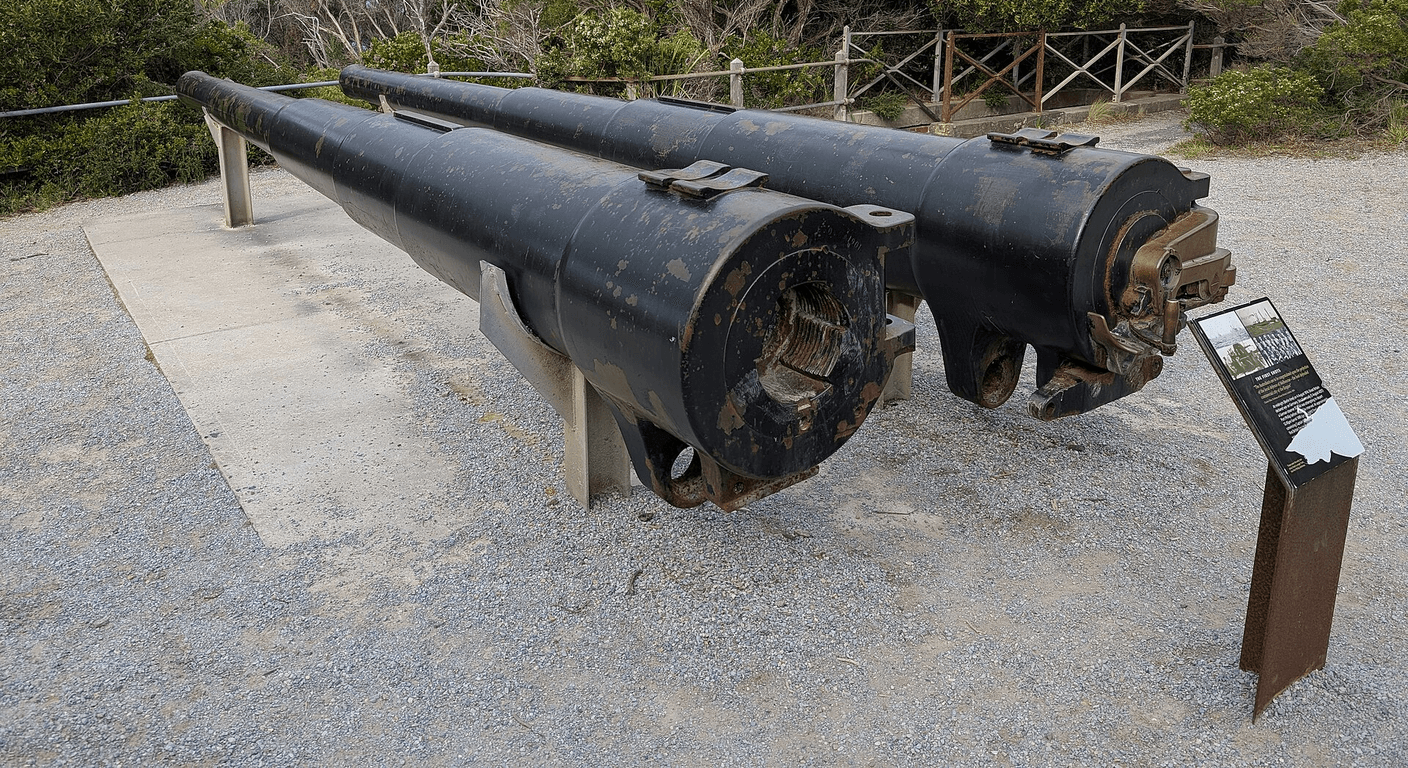
Point Nepean National Park and the town of Sorrento sit at the very tip of the Mornington Peninsula, about 100 kilometres south of Melbourne. For couples who enjoy a mix of open-air history, coastal walking, and a relaxed lunch on a heritage main street, this is one of the most satisfying day trips Victoria offers. The drive is straightforward, the park has a shuttle for those who prefer not to walk the full distance, and Sorrento rewards a slow wander at any pace.
Why Point Nepean and Sorrento work so well together for a day trip
There is a particular satisfaction in reaching the end of something, and Point Nepean delivers exactly that. The national park occupies the very tip of the Mornington Peninsula, where Port Phillip Bay meets Bass Strait — a narrow finger of land that held some of the most strategically important fortifications in colonial Australia. Pair the park with the town of Sorrento a few kilometres back up the road, and you have a day that moves naturally from open-air history to a seaside lunch without ever feeling rushed.
For couples travelling together, the rhythm here is generous. The park is large enough to feel genuinely wild in places, but structured enough that you can choose your own level of effort. Sorrento's main street offers shade, coffee, and a heritage streetscape that rewards a slow pace. Neither place demands a full day on its own; together, they fill one perfectly.
The drive from Melbourne takes around 90 minutes via the Mornington Peninsula Freeway and Point Nepean Road, depending on where in the city you start. There is no direct public transport to Point Nepean, so a private car is the practical choice for most visitors — though the Portsea Pub and some park areas can be reached by bus from Frankston on the 788 bus service (check ptv.vic.gov.au for current timetables, as services are infrequent on weekdays).
Getting there: the drive and what to expect on arrival
From Melbourne's eastern or south-eastern suburbs, the most direct route follows the Monash Freeway to the Mornington Peninsula Freeway (M11), then Point Nepean Road through Rosebud, Rye, and Blairgowrie into Sorrento and Portsea. The road is well-maintained and mostly two lanes through the towns. Allow for slower traffic through Rosebud and Rye on weekends and school holidays — leaving Melbourne before 8.30am makes a noticeable difference.
The main car park for Point Nepean National Park is at the Visitors Centre near Portsea. Parking is sealed and reasonably flat. The visitor centre has accessible toilets, a small information area, and is where you pay the vehicle entry fee (indicative around $20–25; always confirm with Parks Victoria before you go, as fees are reviewed periodically). Staff here are genuinely helpful if you want advice on how to structure the day.
Sorrento itself is about 5 kilometres back from Portsea along Point Nepean Road. There is street parking along the main street (Nepean Highway) and a larger car park near the ferry terminal at the front beach end of town. For couples who want to spend most of the morning in the park and the afternoon in Sorrento, it is worth noting where you park first — driving between the two is easier than walking, and there is no issue with moving the car mid-day.
Point Nepean National Park: forts, the quarantine station, and the history underfoot
The history at Point Nepean is layered and, at times, genuinely moving. The park encompasses the site of Australia's first quarantine station, established in 1852 to isolate passengers arriving with infectious disease. Thousands of migrants — many of them from southern and eastern Europe, including significant numbers of Greeks and Italians in the early twentieth century — spent weeks or months here before being permitted to enter the colony. The interpreted walks through the quarantine precinct give that history a physical presence: the old hospital buildings, the cemetery, the separation between the first-, second-, and third-class sections of the station speak clearly about how the same rules applied very differently depending on where you came from.
Further along the headland, the fortifications at Fort Nepean are the other major draw. Guns were first installed here in the 1880s, and the fort remained operational through both world wars. The gun emplacements, tunnels, and observation posts are well-preserved and largely accessible without climbing. The views from the headland across the heads — the narrow passage between Port Phillip Bay and Bass Strait — are wide and unobstructed. On a clear day you can see the Rip with some clarity, and if the wind is up, the sea conditions through the heads make plain why this was considered the most important defensive position on the Victorian coast.
The walk from the visitor centre to Fort Nepean along the main road is around 9 kilometres return — manageable for fit walkers but a long day on its feet for many people over 60, particularly if you also plan time in Sorrento afterwards. The Quarantine Station precinct is roughly 3 kilometres from the visitor centre, which is a more realistic walk for most couples. The terrain is flat and the path is sealed or well-graded for most of the route, though some sections near the fort have uneven ground and steps. Check the Parks Victoria site for the current state of specific tracks before you go.
The park shuttle: what it covers and who it suits
Parks Victoria operates the TransNepean shuttle bus along the main road through the park, stopping at key sites including the Quarantine Station and Fort Nepean. For couples where one or both partners find long walks difficult, or where preserving energy for the afternoon in Sorrento is a priority, the shuttle is a practical and comfortable option. It runs on a timetable that varies by season and day of the week, so checking the current schedule on the Parks Victoria website before you leave home is essential — do not assume it runs all day every day.
The shuttle is a seated bus service. It is not a guided tour, though the driver will call out stops and can answer basic questions. You can board at the visitor centre and ride to any stop, then either walk between stops at your own pace or wait for the next service. Indicative return fares are roughly $15–$20 per person, but confirm this when you book or check in, as pricing is subject to change. Booking ahead online through the Parks Victoria site is advisable on weekends and during school holidays when demand is higher.
For those with mobility aids — a walking frame or a light wheelchair — it is worth calling Parks Victoria ahead of time to confirm the shuttle's current accessibility configuration. The paths at the Quarantine Station precinct are mostly navigable with a walking stick or trekking poles, but some surfaces near the fort are rougher. The visitor centre staff can advise honestly about which sections are realistic for your situation.
Sorrento: the front beach, the back beach, and the main street
Sorrento has two very different faces, and both are worth a look. The front beach faces Port Phillip Bay — calm, sheltered, and the kind of water that invites a slow walk along the shore rather than a swim. The pier stretches out into the bay here, and the ferry service to Queenscliff departs from this end of town. On most days the water is flat and the light on the bay in the late morning is easy on the eyes. There are benches along the foreshore path, and the walk from the main street down to the pier is gentle and accessible.
The back beach, facing Bass Strait on the ocean side of the peninsula, is a different proposition entirely. The surf here can be significant, the beach is backed by low scrubby dunes, and the water is noticeably cooler and rougher than the bay side. It is a genuinely wild stretch of coast — not a swimming beach for most people, but a good place to stand at the edge of the Southern Ocean and feel the scale of it. Access down to the beach involves a short descent on a sandy path; those with knee or hip concerns should assess the steps before committing. The car park at the back beach makes it accessible without a long walk from town.
The main street — Nepean Highway through the centre of Sorrento — is lined with limestone buildings from the late nineteenth and early twentieth centuries, several of which are listed on the Victorian Heritage Register. There are good cafes, a bakery, a bookshop, and a handful of galleries. The Continental Hotel, rebuilt after the original historic structure was lost to fire, has a large dining terrace that works well for a relaxed lunch. Prices in Sorrento reflect its status as a popular coastal town; a two-course lunch for two with drinks will likely run to around $90–$120 (indicative only — check current menus). The street is flat and walkable, and most shopfronts have level or near-level entry.
Sea conditions, weather, and what to pack
The Mornington Peninsula tip is exposed. Even on a warm Melbourne day, the wind off Bass Strait at the back beach or on the headland at Fort Nepean can be sharp and persistent. A windproof layer that packs small is worth carrying regardless of the season. In summer, the UV on the open headland is high, and shade is limited along the main park road — a broad-brimmed hat and sunscreen are not optional. In winter and spring, the back beach in particular can be genuinely cold and wet; the front beach and the main street are more sheltered year-round.
The Rip — the tidal race through the heads between Point Nepean and Point Lonsdale — is one of the most dangerous stretches of water on the Australian coast. It is not a swimming area under any circumstances. The park's signage is clear about this, but it bears repeating: the sea conditions through the heads can look deceptively calm from the headland, particularly on an incoming tide. The front beach at Sorrento and the sheltered bay beaches further up the peninsula are the appropriate spots for a paddle if the weather is warm.
Comfortable, flat-soled walking shoes are adequate for the shuttle-assisted park visit and the Sorrento main street. If you plan to walk to the fort under your own steam, something with a bit more grip and ankle support is sensible. Carry water — the visitor centre has a tap and there are some facilities at the Quarantine Station, but there is nothing along the main road between stops. A small backpack or day bag keeps your hands free on the uneven sections near the fort.
Putting the day together: a practical sequence for couples
A workable sequence for most couples is to arrive at the Point Nepean visitor centre by 9.30–10am, which gives you the cooler part of the day for the park. Take the shuttle or walk to the Quarantine Station first, allow an hour to ninety minutes there, then continue to Fort Nepean either on foot or by shuttle depending on energy. Late morning back at the visitor centre, then drive the short distance into Sorrento for a mid-to-late lunch — most kitchens in town are open through until 3pm. After lunch, a walk along the front beach or a browse of the main street fills the early afternoon comfortably before the drive back to Melbourne.
If one partner is more interested in the history and the other in the town, it is also reasonable to split the day differently — one person spending longer in the park while the other sits in a Sorrento cafe with a book, then meeting for lunch. The car makes this flexibility easy. The key is not to underestimate how much the park takes out of you, even on the shuttle, and to leave enough time in Sorrento to actually enjoy it rather than rushing through.
The drive back to Melbourne is straightforward in the mid-afternoon. If you want to avoid any traffic build-up on the Peninsula Freeway, leaving Sorrento by 3.30pm on a weekend is sensible. Weekday trips are notably quieter in both the park and the town, and the drive is easier in both directions — if your schedule allows it, a Tuesday or Wednesday visit is a different experience to a Saturday.
Key takeaways
- Point Nepean National Park's TransNepean shuttle lets couples reach the fort and quarantine station without walking the full 9-kilometre return road.
- The Quarantine Station at Point Nepean is one of Australia's most significant and least-visited immigration history sites, with particular resonance for those with southern or eastern European heritage.
- Sorrento's front beach (Port Phillip Bay) is sheltered and calm; the back beach (Bass Strait) is exposed and not suitable for swimming.
- Vehicle entry to Point Nepean National Park costs around $20–$25 (indicative); shuttle fares are roughly $15–$20 per person return — always confirm current fees with Parks Victoria.
- A windproof layer and broad-brimmed hat are worth carrying year-round on the Point Nepean headland, where the wind off Bass Strait can be strong even in summer.
- Leaving Melbourne before 8.30am and Sorrento by 3.30pm on weekends makes the drive noticeably more comfortable in both directions.
Where to look and book
Indicative prices only — always confirm with the operator before booking.
Frequently asked questions
Is there a shuttle bus at Point Nepean National Park for people who can't walk the full distance?
Yes. Parks Victoria operates the TransNepean shuttle along the main road through the park, stopping at the Quarantine Station and Fort Nepean among other points. It runs on a timetable that varies by season and day, so check the current schedule on the Parks Victoria website before you visit. Indicative return fares are roughly $15–$20 per person; confirm pricing when booking.
How accessible is Point Nepean National Park for older visitors with mobility limitations?
The visitor centre and main road through the park are relatively flat and mostly sealed or well-graded. The Quarantine Station precinct is navigable for most people with a walking stick. Some sections near Fort Nepean involve uneven ground and steps. The shuttle bus removes the need to walk the full road, but visitors with wheelchairs or walking frames should contact Parks Victoria ahead of time to confirm current accessibility conditions on specific tracks.
What is the difference between Sorrento's front beach and back beach?
The front beach faces Port Phillip Bay and is calm, sheltered, and suitable for a foreshore walk or a gentle swim in warmer months. The back beach faces Bass Strait and is exposed to ocean swell and wind; it is a wild, scenic stretch of coast but not appropriate for swimming. Both beaches are within a short drive of the Sorrento main street.
Is there public transport from Melbourne to Point Nepean National Park?
There is no direct public transport to the park. The most practical option for most visitors is a private car. A bus service (the 788) runs from Frankston to Portsea via the peninsula towns, but services are infrequent, particularly on weekdays. Check ptv.vic.gov.au for current timetables before planning around public transport.
How long does a day trip to Point Nepean and Sorrento take from Melbourne?
Allow a full day. The drive from Melbourne is around 90 minutes each way. Spending two to three hours in the national park and one to two hours in Sorrento — including lunch — fills a day comfortably without feeling rushed. Leaving Melbourne by 8.30am and Sorrento by 3.30pm works well for avoiding traffic on weekends.
Got a tip, a price update or a story from this route? The community would love to hear it.
Share your views on our Facebook page— Seniors and Solo Traveller Stories
More day trips
Mornington Peninsula Hot Springs: A Gentle Wellness Day for the Over-60s
The Mornington Peninsula has long drawn Melbourne day-trippers for its wineries and beaches, but the hot springs at Fi…
Daylesford and Hepburn Springs: Victoria's Spa-Country Day Out
Daylesford and Hepburn Springs sit about 115 kilometres north-west of Melbourne in the Central Highlands, and together…

Ballarat in a Day by Rail: A Solo Traveller's Gentle Plan for Gold, Gardens and a Warm Lunch
Ballarat is an easy V/Line day trip from Melbourne with a flat, walkable town centre, good cafes and Sovereign Hill. A…