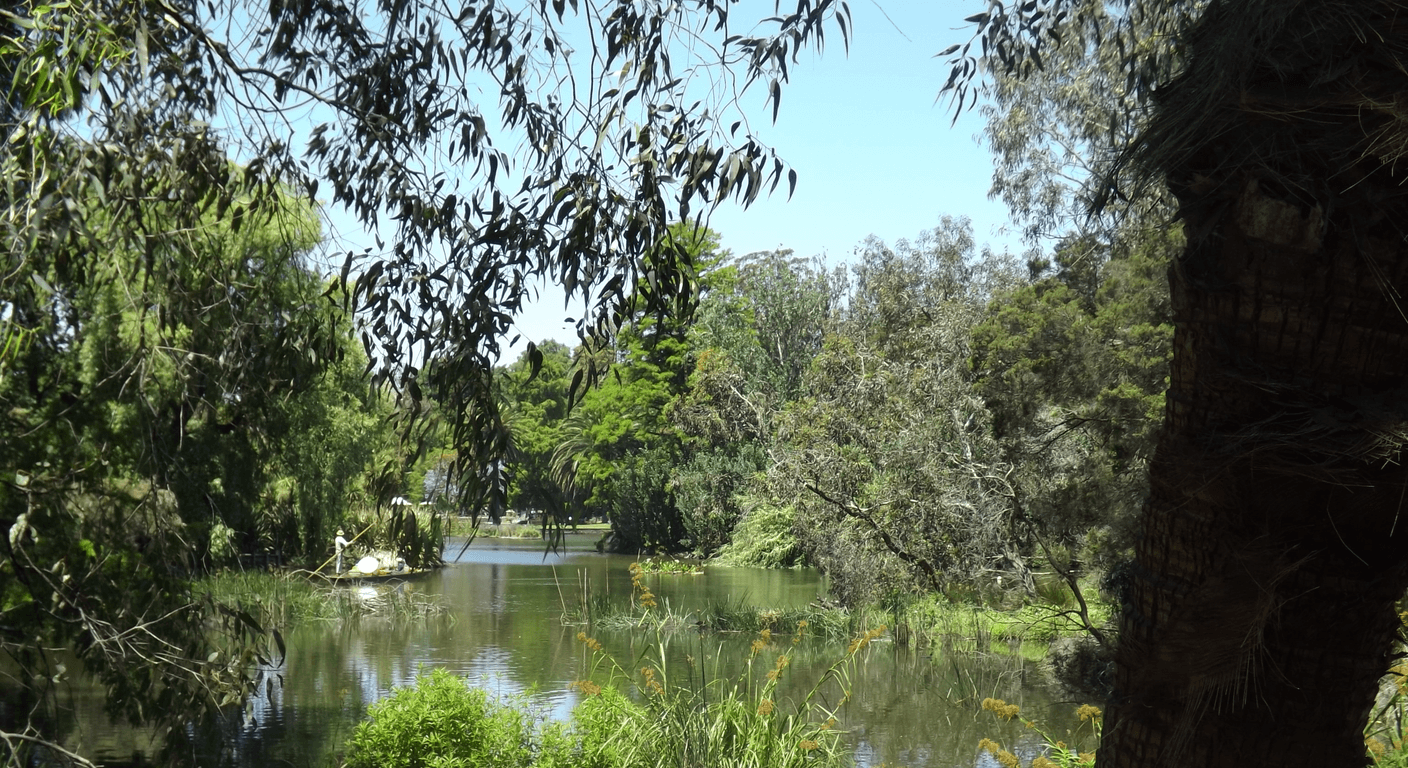
Melbourne's Royal Botanic Gardens offer one of the city's most rewarding and largely free days out, with flat lakeside paths, a world-class plant collection, and the famous Tan track for those who prefer a gentle stroll over a jog. Add in the Aboriginal Heritage Walk, the historic tea rooms, and a quiet moment at the Shrine of Remembrance across the road, and you have a full, unhurried day that asks very little of your body and gives back a great deal. This guide is written for travellers aged 60 and over who want to pace themselves well and leave feeling restored rather than exhausted.
Why the Botanic Gardens work so well for older travellers
There are not many places in central Melbourne where you can spend four or five hours on your feet and come away feeling calm rather than depleted. The Royal Botanic Gardens Melbourne, sitting on 38 hectares beside the Yarra River in South Yarra, is one of them. The paths are mostly wide, well-sealed, and gently graded. Benches appear at regular intervals — more often than you might expect — and the lake at the centre of the gardens gives you a natural, easy circuit that never feels demanding.
For travellers who are mindful of how much walking they can comfortably manage, the inner loop around the ornamental lake is roughly 1.5 kilometres on flat ground. You can extend or contract it depending on how your knees are feeling that day, and there is no pressure to see everything. The gardens reward slow attention: a particular fern grove, a grove of ancient cycads, the way the light moves across the water in the late morning. Coming from a background where garden culture and hospitality are deeply intertwined, many visitors find the space feels genuinely welcoming rather than just scenic.
Wheelchairs and mobility aids are accommodated well on the main sealed paths, though some of the grass sections and lesser-used garden beds are not paved. The Gardens' website has an accessibility map worth downloading before you go, and the staff at the gates are helpful if you have questions. Prams and walkers move easily on the main circuit.
Getting there: tram, train, or a short walk
From the Melbourne CBD, the most straightforward route is tram number 3 or 5 from Swanston Street, alighting at the Domain Interchange stop on St Kilda Road. The ride takes around ten to fifteen minutes from Flinders Street depending on traffic. From the stop, it is a short, flat walk to the main gate on Birdwood Avenue. Trams in Melbourne's inner city free tram zone do not cover this route — you will need a Myki card, so tap on before you board. Current Myki fares and zone information are at ptv.vic.gov.au.
If you are arriving by train, Richmond Station on the Burnley or Alamein lines is walkable to the gardens' eastern edge in around fifteen minutes on flat footpaths, though it is not the most direct route. Taxis and rideshare drop-offs work well at the main gate on Birdwood Avenue. Parking is available on Alexandra Avenue and surrounding streets, but street parking in this area can be limited on weekends and during school holidays, so public transport is the easier choice.
The gardens are open every day from 7:30am, closing at sunset (the specific closing time changes with the season — check rbg.vic.gov.au before you go). Arriving by mid-morning, say around 10am, means the guided walk options are available, the café is open, and the worst of any summer heat is still manageable. In summer, an early start is genuinely worth it.
The Tan track: how to walk it at your own pace
The Tan is Melbourne's most well-known recreational loop — a 3.83-kilometre circuit around the perimeter of the Royal Botanic Gardens. On weekday mornings it is popular with runners and cyclists, but at a relaxed walking pace it is a genuinely pleasant route with river views, established plane trees, and the changing face of the gardens on one side. At a comfortable stroll, most people cover it in around 55 to 70 minutes.
The surface is compacted gravel for most of its length, which is stable underfoot but not sealed. Sturdy shoes with a low heel are sensible; thongs or dress shoes are not ideal. The one section worth noting for those with knee concerns is the Anderson Street hill on the northern edge — it is the only significant incline on the circuit and it is short, but it is real. If you prefer to skip it, you can simply turn back and retrace your steps along the river side instead, which is arguably the prettier direction anyway.
Benches are placed at intervals along the Tan, and the path is wide enough that faster users pass easily without causing stress. Many older visitors choose to walk only a portion of the Tan — the river-facing stretch from the Alexandra Gate toward the Swan Street Bridge and back — rather than completing the full loop. That is a perfectly reasonable approach and gives you most of the scenery without the full distance.
The Aboriginal Heritage Walk: the most rewarding guided experience in the gardens
Run by the Royal Botanic Gardens Victoria in partnership with the Bunurong Land Council and Wurundjeri Woi Wurrung Cultural Heritage Aboriginal Corporation, the Aboriginal Heritage Walk is a 90-minute guided experience that moves through the gardens at a gentle pace while sharing the deep cultural knowledge embedded in the plants and landscape. It is not a fitness walk — the distance is modest and the pace is unhurried — but it is substantive and thoughtful in a way that many visitors find genuinely moving.
The walk covers traditional uses of plants for food, medicine, and shelter, and situates the gardens within the much longer story of Wurundjeri and Boon Wurrung Country. For travellers who have come to Australia from elsewhere, or who have lived here for decades without fully engaging with First Nations history, this walk offers a grounded, non-confrontational way in. The guides are knowledgeable and the format allows for questions. It runs on selected days and bookings are essential — check the current schedule at rbg.vic.gov.au.
The indicative cost is around $40 per adult at the time of writing, but confirm directly with RBG Victoria as pricing may have changed. Concession rates are available. The walk covers mixed terrain including some grass, so closed, flat-soled shoes are recommended over sandals. It is one of the more meaningful ways to spend 90 minutes in Melbourne, and it is not widely known among visitors who have not done their research.
The tea rooms, café, and where to rest well
The Gardens' main café and kiosk area sits near the central lake and is a natural stopping point on any circuit. Seating is a mix of indoor and outdoor, with shade options, and the menu covers light meals, sandwiches, cakes, and hot drinks. It is a good place for a mid-morning tea before a guided walk, or a sit-down lunch after the Tan. Prices are in line with Melbourne café standards — roughly $6 to $8 for a coffee, $15 to $20 for a light lunch — though confirm current pricing when you arrive as these are indicative only.
The historic Terrace Tea Rooms building, near the Visitor Centre, is worth noting for its setting alone: a heritage-listed structure with views over the garden beds that has been a gathering place for Melburnians for generations. Whether you are there for a pot of tea or simply to sit in a beautiful space for twenty minutes, it earns its place in the day's itinerary. Seating is comfortable and the pace is unhurried.
Water fountains are located throughout the gardens and are marked on the free map available at the gate. Bring a refillable bottle regardless — on a warm day the walk around the lake in full sun can be more tiring than it looks on paper. Sunscreen and a hat are not optional in Melbourne's spring and summer; the open sections of the Tan in particular offer little shade.
The Shrine of Remembrance: a quiet hour across the road
The Shrine of Remembrance sits directly across St Kilda Road from the Botanic Gardens' main gate, a five-minute walk from the Birdwood Avenue entrance. Entry is free. The building itself is one of Melbourne's most significant pieces of civic architecture, built in the 1920s and 1930s to honour Victorians who served in the First World War, and subsequently expanded to remember all Australians who have served in war and peacekeeping.
The interior is sombre and well-considered, with the famous Remembrance Stone at its centre — designed so that a ray of natural light falls on the word 'Love' at exactly 11am on 11 November each year. The surrounding gardens and forecourt are accessible and flat, with clear sightlines across the Domain toward the city skyline. For anyone who has family connections to Australian or Indian military history — and many Indian Australian families do, given the shared service in both World Wars — the space carries particular resonance.
The Shrine has a visitor centre with exhibitions, accessible toilets, and seating inside. Staff are knowledgeable and the atmosphere is respectful without being forbidding. It pairs naturally with the Botanic Gardens as an afternoon addition: after the gardens, cross St Kilda Road at the signalised crossing on Birdwood Avenue, spend an hour at the Shrine, and then catch the tram back to the city from the Domain Interchange stop directly outside. Full details at shrine.org.au.
Best seasons and what to expect through the year
Melbourne's Botanic Gardens are genuinely worth visiting in any season, though each has its character. Spring, from September through November, brings the rose garden into colour and the ornamental beds are at their most varied. The light is soft and the temperature is generally manageable for extended walking — daytime temperatures in the mid-teens to low twenties are comfortable for most people. This is arguably the most popular time to visit, and the gardens can be busier on weekends.
Summer, December through February, requires planning around the heat. Melbourne summers can deliver days above 35 degrees Celsius, and the open sections of the Tan and the exposed lakeside paths are exposed. An early start — arriving by 9am — makes a summer visit entirely comfortable, and the dense tree canopy in the fern gully and the garden's shaded corridors provides genuine relief. The café and Terrace Tea Rooms are air-conditioned.
Autumn, from March through May, is a particular favourite for many regular visitors. The plane trees along the Tan change colour through April and the light on the lake in the late afternoon is warm and low. Crowds thin compared to spring. Winter — June through August — is quiet, sometimes cold, and occasionally wet, but the gardens have a different quality: the structure of the plantings is more visible, the paths are never crowded, and on a clear winter morning the Shrine and the gardens together feel like your own private Melbourne. Layers and waterproof shoes are the practical answer.
Key takeaways
- The Royal Botanic Gardens Melbourne is largely free to enter and offers flat, well-sealed paths suitable for mobility aids and older travellers.
- The Tan track is 3.83 kilometres of compacted gravel around the gardens' perimeter — walkable in under 70 minutes at a stroll, with the option to do only a section.
- The Aboriginal Heritage Walk is a 90-minute guided experience costing around $40 per adult that covers First Nations plant knowledge and cultural history at a gentle pace.
- The Shrine of Remembrance is free, fully accessible, and a five-minute walk from the gardens' main gate — a natural pairing for an afternoon visit.
- Spring and autumn are the most comfortable seasons for a full day in the gardens; summer visits are best started early to avoid peak heat.
- Benches are well distributed throughout the gardens and the Tan, and the café and Terrace Tea Rooms offer solid rest points mid-day.
Where to look and book
Indicative prices only — always confirm with the operator before booking.
Frequently asked questions
Is the Royal Botanic Gardens Melbourne free to enter?
Yes, general entry to the Royal Botanic Gardens Melbourne is free. Some specific experiences, including the Aboriginal Heritage Walk, have a separate fee — around $40 per adult at the time of writing, with concession rates available. Confirm current pricing at rbg.vic.gov.au before you go.
Is the Tan track suitable for older walkers or people with mobility concerns?
The Tan track is 3.83 kilometres on a compacted gravel surface and is manageable for most older walkers at a relaxed pace. The one notable incline is on the Anderson Street hill on the northern section. Walkers who prefer entirely flat ground can stick to the river-facing section of the Tan or the inner sealed paths around the ornamental lake, which are flat and wide.
How do you get to the Royal Botanic Gardens Melbourne by public transport?
Tram numbers 3 and 5 from Swanston Street in the CBD stop at the Domain Interchange on St Kilda Road, from which the gardens' main gate on Birdwood Avenue is a short, flat walk. A Myki card is required. Current fares and timetables are at ptv.vic.gov.au.
Do you need to book the Aboriginal Heritage Walk in advance?
Yes, bookings are essential for the Aboriginal Heritage Walk as numbers are limited. The walk runs on selected days throughout the year. Check the current schedule and book directly through the Royal Botanic Gardens Victoria website at rbg.vic.gov.au.
What is the best time of year to visit the Royal Botanic Gardens Melbourne?
Spring (September to November) and autumn (March to May) are generally the most comfortable seasons for older visitors — mild temperatures, good light, and the gardens at their most colourful. Summer visits are best done early in the morning to avoid heat. Winter is quiet and peaceful, though cooler and occasionally wet.
Got a tip, a price update or a story from this route? The community would love to hear it.
Share your views on our Facebook page— Seniors and Solo Traveller Stories
More melbourne
A Couple's Slow Day in Melbourne's Gardens and Markets: How to Spend Almost Nothing
A gentle, low-cost day out in inner Melbourne built around free gardens, cheap market eating and easy public transport…

A Day Out With the Girls in Melbourne's CBD: Free Galleries, Cheap Eats and Easy Trams
A practical plan for a group of friends over 60 to enjoy Melbourne's inner city on a budget: free galleries, the NGV,…

A Solo Winter Day in Melbourne's CBD: Free Galleries, Warm Corners and Quiet Pleasures
A practical, gentle plan for spending a winter day alone in Melbourne's inner city without spending much. It covers fr…