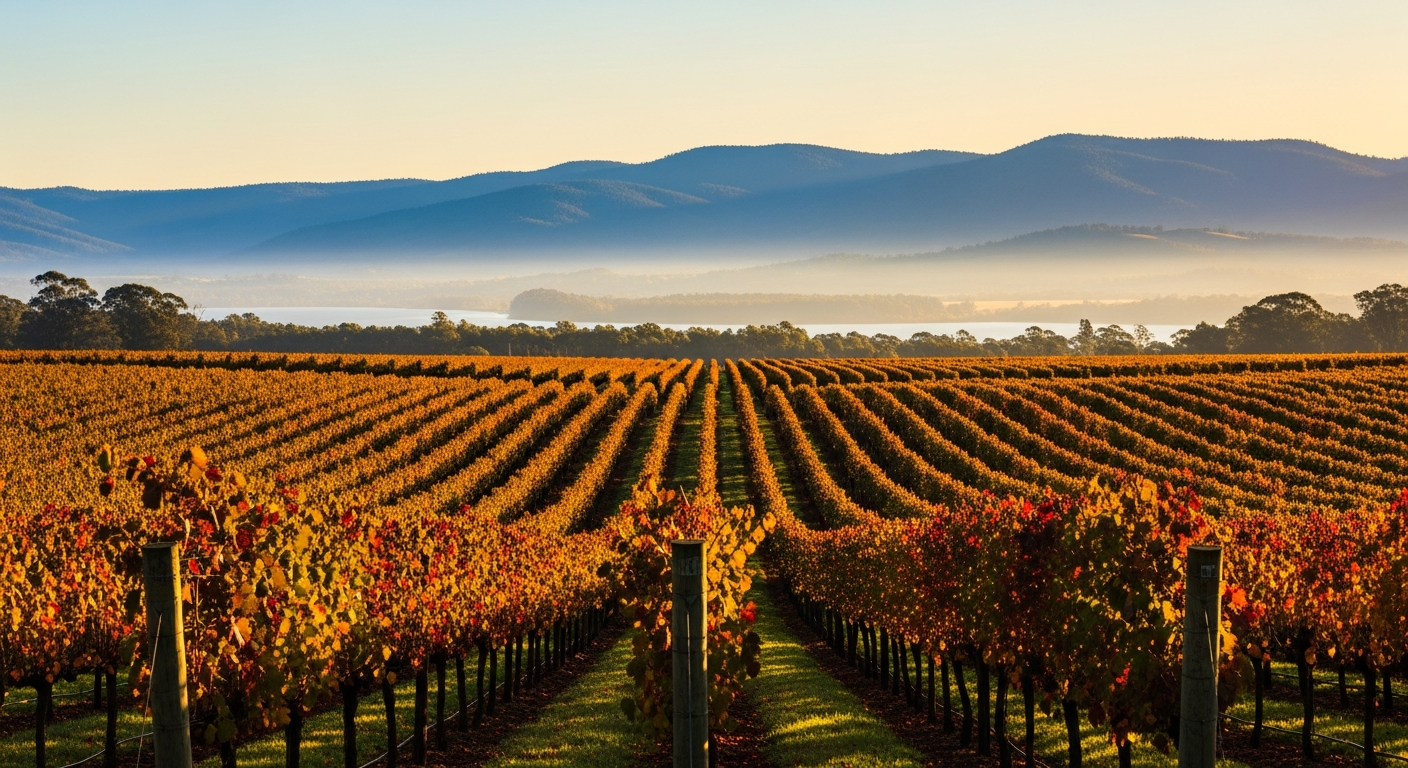
A gentle seven to ten day food and wine trip through Tasmania suits over-60 couples who want short drives, good meals and time to linger. This guide covers the Spirit of Tasmania crossing, the Tamar Valley and Coal River wine regions, realistic AUD costs and sensible pacing.
Why Tasmania for a food and wine trip over 60?
This is a trip worth making more than once. Tasmania is small enough that you are never far from the next good meal, and the distances between cellar doors are short, which matters when you would rather not spend the day behind the wheel.
For over-60 couples, the appeal is the pace. You can drive forty minutes, taste a few cool-climate pinots, have a long lunch, and be back at your accommodation by mid-afternoon. There is no rush and no need to cover great distances to feel you have seen something worthwhile.
How do you get there, and what does it cost?
The most relaxed way for Victorians is to take your own car across on the Spirit of Tasmania. The two new vessels now sail from the Geelong terminal at Corio Quay, which is a shorter drive for many Victorians than the old Port Melbourne run. Crossings are overnight or daytime depending on the season.
As an indicative guide, a passenger fare starts from around A$159 each way, with vehicles from roughly A$99 each way. A recliner is the cheapest seat, but for an overnight sailing a private cabin is worth it, adding around A$100 to A$200. Flying into Hobart or Launceston with Jetstar or Virgin and hiring a car is the alternative, often A$150 to A$300 return per person in the shoulder season.
Taking your own car means you can load up on cheese, wine and produce without worrying about baggage limits. That alone can pay for the ferry.
Where should you base yourselves?
Two bases beat moving every night. Pack and unpack twice, not seven times. Spend the first half around Launceston for the Tamar Valley, then the second half around Hobart for the Coal River Valley and the Huon.
In Launceston, a comfortable apartment or boutique hotel runs around A$180 to A$280 a night. In Hobart, expect A$200 to A$320 in the warmer months, a little less in winter. Book three to four months ahead for the January to March period, which is the busiest and the best for ripe-season produce.
What are the wine regions actually like to visit?
The Tamar Valley north of Launceston is gentle country with sealed roads and well-signposted cellar doors. The wines are cool-climate, so sparkling, pinot noir, riesling and chardonnay. Most tastings are A$10 to A$15 per person, often waived if you buy a bottle.
Near Hobart, the Coal River Valley around Richmond is compact and easy to manage in a day. Richmond itself is a pretty historic town with a famous old bridge and good bakeries. The Huon Valley to the south adds apples, cider and salmon to the mix.
A word of caution worth repeating. If you are tasting, one of you stays the designated driver, or you book a small-group wine tour. Tasmanian roads are quiet but they wind, and the kangaroos come out at dusk.
Is a small-group tour better than self-driving?
It depends on your confidence and whether you want to share the experience. Self-driving gives you freedom and is cheaper. A guided day wine tour out of Launceston or Hobart typically costs A$160 to A$250 per person including lunch and tastings, and means neither of you has to skip a glass.
Solo travellers reading this should note that day tours rarely carry a single supplement, since you are not sharing a room. It is the multi-day packages where the supplement bites, often adding twenty to forty per cent. For a food and wine trip, self-driving with the occasional day tour beats a packaged tour.
What does a sensible week look like?
Days one and two, settle into Launceston, walk the Cataract Gorge, which has a chairlift and flat riverside paths, and ease into the Tamar cellar doors. Day three, a longer lunch at a single winery rather than rushing four.
Day four, drive to Hobart, roughly two and a half hours with a stop. Days five and six, the Coal River Valley, Richmond and the Salamanca Market if it is a Saturday. Day seven, the Huon Valley or a rest day in Hobart before the ferry home.
Budget around A$3,500 to A$5,000 for a couple for a week, covering the ferry, accommodation, meals, tastings and fuel. That is comfortable rather than lavish, and you could trim it by eating in some nights with all that good produce you have bought.
What about accessibility and the weather?
Most cellar doors and restaurants are single-level and welcoming, though some older heritage buildings have steps. Phone ahead if mobility is a concern. The Spirit of Tasmania has lifts and accessible cabins, but book those early as they are limited.
Autumn, March to May, is the standout season here. The vineyards turn colour, the crowds thin, and the cool weather suits long lunches. Winter is quiet and cheaper, with Dark Mofo in June drawing a crowd to Hobart, but pack properly for the cold.
Key takeaways
- The Spirit of Tasmania now sails from Geelong, with fares from around A$159 per person and vehicles from A$99 each way.
- Use two bases, Launceston and Hobart, rather than moving every night.
- Tastings typically cost A$10 to A$15 per person and are often waived with a purchase.
- Budget roughly A$3,500 to A$5,000 for a couple for a comfortable week.
- Always keep a designated driver or book a small-group tour when tasting.
- Autumn offers the best balance of colour, mild weather and fewer crowds.
Where to look and book
Indicative prices only — always confirm with the operator before booking.
Frequently asked questions
Do we need a car in Tasmania for a food and wine trip?
Yes, a car is the most practical option as cellar doors are spread across rural valleys with limited public transport. Bring your own on the ferry or hire one from the airport.
Are there seniors discounts in Tasmania?
Some attractions and transport offer concessions for holders of an Australian Seniors Card. Always carry your card and ask, as discounts vary by operator.
Is there a single supplement for solo travellers?
Day wine tours generally have no single supplement. Multi-day packaged tours often do, so self-driving and booking individual day tours usually works out better value for solo travellers.
When is the best time to go?
Autumn, from March to May, offers mild weather, vineyard colour and smaller crowds. Summer is busiest, and winter is cheaper but cold.
How far ahead should we book?
Book the ferry and accommodation three to four months ahead for the January to March peak, especially if you want a private cabin or an accessible room.
Got a tip, a price update or a story from this route? The community would love to hear it.
Share your views on our Facebook page— Seniors and Solo Traveller Stories
More holidays

A Couple's Halong Bay and Hanoi Fortnight: Cruising Northern Vietnam at a Steady Pace, With Honest AUD Costs
Northern Vietnam suits over-60 couples who want a slower trip with comfort and good food. This 14-day plan pairs Hanoi…
Adelaide and the Barossa for Two Over 60: A Gentle Week With Real AUD Costs
Adelaide is one of Australia's most relaxed capitals for older travellers, and it pairs beautifully with a few unhurri…
Adelaide and the Barossa Solo at 69: A Gentle Week by Train and Bus, With Honest AUD Costs
A practical, unhurried week in Adelaide and the Barossa for a solo Victorian traveller over 60. Covers getting there f…