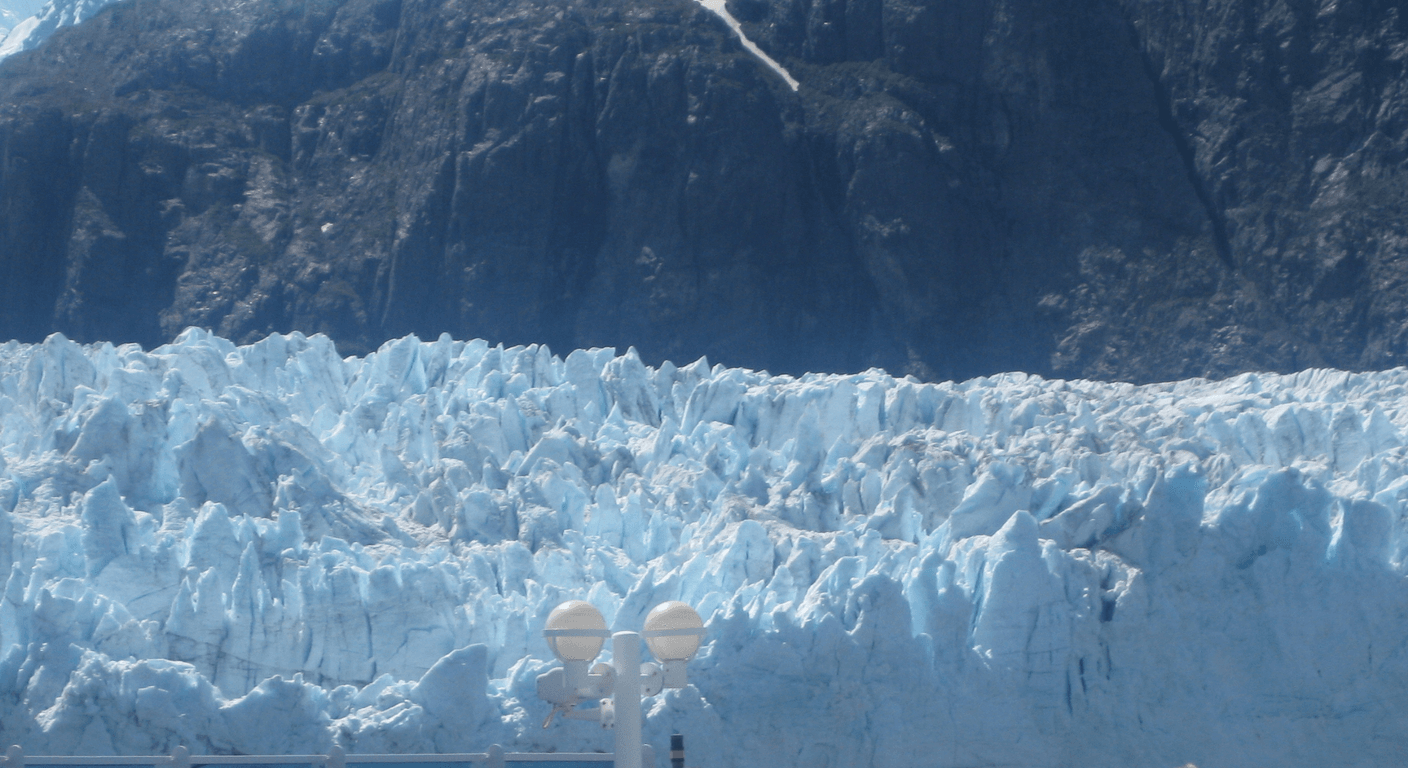
Alaska cruises suit Australian travellers over 60 remarkably well: the season is compact, the scenery does most of the work, and a ship gives you a comfortable, low-logistics base for some of the world's most dramatic coastal wilderness. This guide covers the best months to sail, how to choose a cabin for the views, shore excursion options across different mobility levels, and how to get there from Victoria.
Why Alaska Works So Well for Older Australian Travellers
Alaska is one of those destinations that rewards the traveller who moves at a considered pace. The scenery — fjords, tidewater glaciers, old-growth rainforest, and wildlife that appears without any effort on your part — unfolds from the ship's deck or your cabin window as much as it does on land. For a traveller in their sixties or seventies who has already done the faster-paced European capitals, Alaska offers something genuinely different: scale, quiet, and a sense that the natural world is still largely in charge.
For Australians, the logistics are more manageable than they might first appear. The main embarkation ports — Vancouver (Canada) and Seattle (USA) — are well served by direct and one-stop flights from Melbourne and Sydney, and both cities are pleasant places to spend a day or two before boarding. The cruise season is tightly defined, which actually simplifies planning: you are not weighing up dozens of possible windows. You sail between May and September, and the question is simply which part of that window suits you best.
A solo male traveller in his late sixties will find Alaska cruises a comfortable fit. The demographic on most mainstream Alaska sailings skews towards the 55-75 range, so the pace, the dining hours, and the onboard programming tend to reflect that. The ships themselves — particularly the mid-to-large vessels used by Holland America and Princess — are designed for extended time at sea with good indoor observation spaces, which matters on days when the weather closes in.
When to Go: What Each Month in the Alaska Season Actually Delivers
May is the opening of the season and has a particular character. The landscape is still transitioning from winter, snow sits lower on the mountains than it will in summer, and the ports are noticeably quieter. Wildlife activity is high — bears are emerging and actively foraging, and humpback whales have returned to feeding grounds. The trade-off is cooler temperatures (roughly 7–12°C in Southeast Alaska) and a higher chance of overcast days. For a traveller who dislikes crowds and doesn't mind layering up, May is genuinely rewarding.
June and July are the core of the season. Daylight is extraordinary — in Juneau and Ketchikan you are looking at 18 or more hours of usable light in late June — and temperatures in port towns typically reach 14–18°C on a fine day. This is also when Alaska is most visited, so tender ports like Skagway and Glacier Bay can feel busy at peak times. That said, the sheer scale of the landscape absorbs crowds in a way that a small European town does not. Wildflowers are at their peak in July, and the whale watching tends to be at its most reliable.
August and September offer a different reward. The summer crowds begin to ease from mid-August, the light shifts to something warmer and more golden, and the forests start to show early autumn colour by September. Temperatures remain reasonable through August, cooling noticeably in September. September sailings can offer excellent value compared to the June–July peak, and wildlife viewing — particularly for brown bears fishing for salmon — is arguably at its most dramatic. September is worth serious consideration for a traveller who is flexible on timing.
Inside Passage or Gulf of Alaska: Which Itinerary Is Right for You?
The two main Alaska cruise routes serve different purposes and suit different priorities. The Inside Passage — the sheltered waterway running from Vancouver or Seattle through Southeast Alaska, calling at ports like Ketchikan, Juneau, Skagway, and Sitka — is the classic choice. Because most of the sailing is in protected coastal waters, the ship's motion is relatively gentle for much of the voyage. This is a meaningful consideration for any traveller who is uncertain about sea sickness or who finds rough water uncomfortable.
Inside Passage itineraries typically run seven nights and are offered as roundtrip sailings from Vancouver or Seattle, which simplifies the air logistics considerably for Australians. You fly into one city and out of the same one, without needing a one-way positioning flight. The ports are small, walkable (with some caveats around terrain — see the shore excursions section), and each has a distinct character. Juneau, accessible only by sea or air, has a compact historic core and is the most practical base for glacier and whale-watching excursions.
Gulf of Alaska itineraries are typically one-way, sailing between Vancouver or Seattle in the south and Seward or Whittier (near Anchorage) in the north, or vice versa. They add ports like Valdez, College Fjord, and Hubbard Glacier — one of the most active tidewater glaciers on the coast. The open-ocean sections crossing the Gulf can be rougher than the Inside Passage, so this is worth weighing honestly. The payoff is a broader sweep of Alaska's geography and the opportunity to add a land-based extension — the cruise-tour packages into Denali National Park — without significant backtracking. For a traveller doing Alaska once and wanting to see as much as possible, a Gulf itinerary with a Denali add-on is a strong option.
Choosing Your Cabin: Why a Verandah Makes Sense in Alaska
In most cruise destinations, the argument for an interior cabin is a reasonable one — you spend little time in the room, the saving is substantial, and the difference in experience is minor. Alaska changes that calculation. The scenery is continuous: glaciers calving at 5am, humpbacks surfacing alongside the ship at dusk, bald eagles in the trees as you move through the narrows. A verandah cabin means you can be outside with a coffee in your dressing gown, watching something extraordinary, without having to get dressed and navigate to a public deck. For a solo traveller who is paying a single supplement regardless, the upgrade to a verandah is often worth absorbing.
Verandah cabins on the ships that dominate the Alaska market — Holland America's Nieuw Amsterdam or Koningsdam, Princess's Crown Princess or Emerald Princess — are typically well-sized, with a sliding door to a private balcony. On Alaska itineraries specifically, most lines position the ship so that both sides have viewing opportunities at key scenic moments, but it is worth noting that Glacier Bay National Park transits are sometimes better viewed from port or starboard depending on the day's route. The ship's public observation decks and forward lounges are always available and are often where the best collective viewing happens.
From a mobility and practicality standpoint, a cabin on a lower deck midship reduces the effect of any swell and minimises walking distance to the main facilities. If you have any balance concerns or use a walking aid, midship and lower is a sensible default. Accessible cabins with wider doorways and roll-in showers are available on most large ships; it is worth requesting these early, as there are fewer of them and they are allocated on a first-come basis. Check directly with the cruise line regarding specific accessibility features rather than relying on general descriptions.
Shore Excursions for Varying Mobility: What to Expect on the Ground
Alaska's port towns are not uniformly accessible, and it pays to go in with honest expectations. Ketchikan's Creek Street boardwalk is relatively flat and manageable. Juneau's downtown is compact and walkable, though the terrain rises quickly once you move away from the waterfront. Skagway is largely flat in the town centre but the surrounding landscape is steep, and the famous Chilkoot Trail is not for anyone with significant joint or mobility issues. Sitka, often considered the most historically interesting port, has a mix of flat and gentle-sloped walking.
Shore excursions are graded by activity level, and the major lines use a consistent light/moderate/strenuous scale. For a traveller who walks comfortably for an hour or two on flat ground but avoids steep terrain, the light-rated options in each port are genuinely worthwhile — whale-watching boats, glacier flightseeing, the White Pass and Yukon Route narrow-gauge railway from Skagway (seated throughout, with no walking required beyond boarding), and narrated city tours in accessible coaches. These are not lesser options; the whale watching from Juneau is among the most reliable in the world, and the railway journey from Skagway is a legitimate highlight by any measure.
Glacier viewing deserves specific mention because it happens primarily from the ship rather than on land. Glacier Bay National Park is accessed by the ship itself — a full day of slow cruising through the bay, with a National Park Service ranger on board providing commentary. Hubbard Glacier on Gulf itineraries is similar. Neither requires any walking at all, and both represent the kind of experience that is genuinely more accessible from a cruise ship than from any land-based alternative. For a traveller whose mobility limits some shore activities, these glacier days often become the defining memory of the trip.
Wildlife and Glaciers: Setting Realistic Expectations
Alaska's wildlife is real and abundant, but it operates on its own schedule. Humpback whales are the most reliably sighted large animal — the feeding grounds in Frederick Sound and Icy Strait Point are productive from June through August, and most whale-watching excursions out of Juneau or Sitka have strong success rates. Orcas are seen less predictably from cruise ships, though they are present in the region. Brown bears are most reliably spotted on specific wildlife-watching excursions to places like Pack Creek or from floatplane to bear-viewing sites — these excursions book out early and cost considerably more than standard shore options, but they deliver.
Bald eagles, by contrast, require no special effort. They perch visibly in the spruce and hemlock along the waterway, and a traveller standing on a verandah or forward deck will see dozens over the course of a seven-night sailing. Harbour seals haul out on ice floes near tidewater glaciers. Sea otters float on their backs in the kelp beds near Sitka. The wildlife experience in Alaska is layered — some of it is dramatic and sought-out, and some of it simply happens around you.
Glacier calving — the process of ice breaking off the face of a glacier and falling into the water — is dramatic when it happens but cannot be scheduled. Tidewater glaciers calve continuously in small ways; large calving events are intermittent. The ship will typically spend several hours in front of a major glacier, and patience is rewarded. Binoculars are worth packing. The sound of calving ice carries across the water before the visual event, which gives some warning. On overcast days, the blue of glacier ice is often more vivid than in direct sunlight, so grey weather is not necessarily a disappointment.
Getting There from Victoria: Flights, Cruise-Tours and Practical Planning
From Melbourne, the most common routing to Vancouver is via Auckland or a Southeast Asian hub, with total travel times typically in the range of 20–24 hours depending on connections. Direct Melbourne–Vancouver flights exist seasonally through Air Canada; check current schedules as these change between seasons. Seattle is served via Los Angeles or San Francisco from Melbourne, which adds a US domestic connection but opens up a broader range of fare options. For a traveller who finds long haul tiring, arriving a day or two before embarkation in Vancouver is strongly advisable — it removes the risk of a flight delay affecting embarkation and gives time to adjust.
Cruise-tour packages, offered by Princess, Holland America, and others, combine a Gulf of Alaska cruise with a land journey through the Yukon and interior Alaska, typically including Denali National Park, Fairbanks, and the Kenai Peninsula. These are pre-packaged and move by a combination of rail (the Alaska Railroad's glass-domed Goldstar carriages are a genuine pleasure), motorcoach, and ship. For a solo traveller who prefers not to self-organise a complex multi-modal itinerary, a cruise-tour removes significant logistical effort. They run to a fixed schedule and include accommodation and most meals in the land portion. Indicative pricing for a 12–14 night cruise-tour package starts from roughly AUD 7,000–9,000 per person before flights; confirm current pricing directly with operators as these vary considerably by cabin grade and season.
Travel insurance is non-negotiable for an Alaska cruise from Australia. Medical evacuation from remote Alaskan waters is expensive, and standard policies may have exclusions around pre-existing conditions that need to be addressed at the time of purchase. The Australian Government's Smartraveller website (smartraveller.gov.au) has current travel advice for the United States and Canada and is worth consulting before finalising plans. A Victorian over-60 traveller should specifically check that their policy covers cruise-related medical events, helicopter evacuation, and trip cancellation due to health — and that cover is in place from the date of booking, not just from departure.
Key takeaways
- The Alaska cruise season runs May to September; September offers fewer crowds and strong wildlife viewing, particularly bear watching.
- Inside Passage itineraries are roundtrip from Vancouver or Seattle, making the air logistics simpler for Australians than one-way Gulf of Alaska sailings.
- A verandah cabin is worth the upgrade on an Alaska cruise because the scenery is continuous and much of it happens at unpredictable hours.
- Glacier Bay and Hubbard Glacier are experienced from the ship itself and require no walking, making them among the most accessible highlights of the voyage.
- Cruise-tour add-ons into Denali National Park travel primarily by Alaska Railroad glass-dome carriages and motorcoach, suiting travellers who prefer pre-arranged logistics.
- Travel insurance covering medical evacuation and pre-existing conditions must be purchased from the date of booking, not departure, and should specifically cover cruise-related events.
Where to look and book
Indicative prices only — always confirm with the operator before booking.
Frequently asked questions
What is the best month for an Alaska cruise for Australian seniors?
June and July offer the longest daylight, warmest temperatures, and most reliable whale watching, making them the most popular choice. September is worth considering for travellers who prefer quieter ports, lower indicative fares, and peak brown bear viewing as salmon runs peak — though temperatures are cooler and some operators end their season by late September.
Is an Alaska cruise suitable for someone with limited mobility?
Yes, with some planning. The major glacier experiences — Glacier Bay National Park and Hubbard Glacier — are viewed entirely from the ship and require no walking. Shore excursions are graded by activity level, and light-rated options such as whale-watching boats, the White Pass railway from Skagway, and narrated coach tours are genuinely worthwhile without requiring significant walking. Accessible cabins with roll-in showers are available on most large ships but should be requested early.
Do Australian travellers need a visa for an Alaska cruise departing from Vancouver?
Roundtrip Inside Passage sailings that depart and return to Vancouver without calling at a US port may not require a US visa for Australian passport holders, but itineraries that include US ports or disembark in a US city will require an ESTA (Electronic System for Travel Authorisation) at minimum. Requirements can change; check current advice at smartraveller.gov.au and the US Embassy Australia website before booking.
What does a solo supplement typically add to the cost of an Alaska cruise?
Most mainstream cruise lines charge a solo supplement of 50–100% of the per-person double-occupancy fare, effectively meaning a solo traveller pays for two people in one cabin. Some lines offer reduced or waived solo supplements on selected sailings or cabin categories; it is worth asking specifically about solo pricing when comparing fares. Indicative costs vary significantly by line and sailing date — confirm current solo pricing directly with the operator.
How do you get from Melbourne to the Alaska cruise embarkation ports?
Vancouver is the most convenient embarkation port for Australians, with seasonal direct flights from Melbourne via Air Canada and connections through Auckland and Southeast Asian hubs; total travel time is typically 20–24 hours. Seattle is an alternative, reached via Los Angeles or San Francisco from Melbourne. Arriving one to two days before embarkation is strongly recommended to allow for flight delays and time zone adjustment.
Got a tip, a price update or a story from this route? The community would love to hear it.
Share your views on our Facebook page— Seniors and Solo Traveller Stories
- Holland America Line – Alaska Cruises
- Princess Cruises – Alaska
- Hurtigruten Expeditions
- Glacier Bay National Park – National Park Service
- Australian Government Smartraveller – United States
- Australian Government Smartraveller – Canada
- Tourism Juneau – Official Visitor Information
- White Pass and Yukon Route Railway
More cruises
Can You Cruise Round Australia and the South Pacific Without Boarding a Plane?
Princess Cruises sails from Australian ports including Melbourne and Sydney, which means over-60s in Victoria can join…
Cruising from Melbourne and Sydney: A Couple's Honest Guide to Sailing After 60
Ocean cruises departing Australian ports remain one of the easiest ways for over-60 travellers to see new places witho…
Is a Coral Expeditions Kimberley Cruise the Right Pace for Over-60 Travellers?
Coral Expeditions runs small-ship expedition cruises along Western Australia's Kimberley coast, carrying far fewer pas…