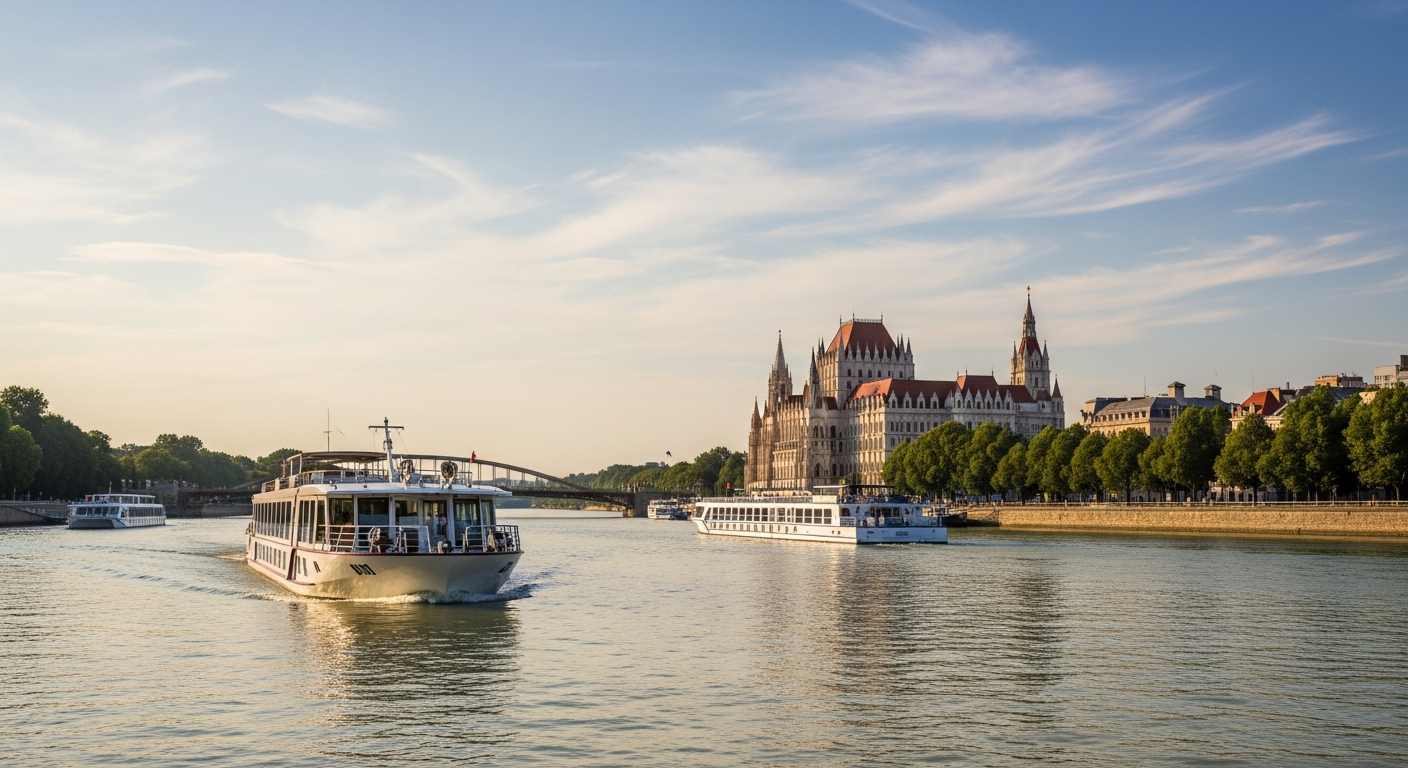
European river cruising suits over-60 travellers who want unpacking once, easy walking and a slower pace. This guide covers realistic AUD costs, cabin choices, how to dodge single supplements by travelling with friends, and the best seasons to book.
Why does river cruising suit over-60 travellers so well?
Picture waking up moored in the middle of a small Austrian town, stepping straight off the ship, and being at the bakery before the day-trippers arrive. That is the rhythm of river cruising, and it is one of the gentlest ways to see Europe once you are past 60.
A typical group — say two couples and a solo friend — is often won over by the lack of fuss. You unpack once. The ship moves mostly at night, the towns come to you, and the walking is flat and short. After years of dragging suitcases up hotel stairs, that alone is worth a great deal.
What does a European river cruise actually cost in AUD?
For a mainstream all-inclusive line such as APT or Scenic, expect roughly A$6,500 to A$9,000 per person for a 15-day Danube or Rhine itinerary, twin share. That usually covers your cabin, meals, most drinks, daily excursions and tips. Lines like Viking and Avalon often start lower, from around A$5,500 per person for shorter 8-day sailings.
The headline price is rarely the final price. You still need return flights from Melbourne, which run A$1,800 to A$2,800 depending on season and how far ahead you book. Add travel insurance, which for over-60s can be A$300 to A$800 for a trip of this length, more if you have pre-existing conditions to declare.
The honest tip is to budget the lot before falling in love with a brochure. The all-inclusive lines often work out better value than they first look, because the drinks and excursions are already paid for and there is no nickel-and-diming on board.
How do single supplements work, and how do friends get around them?
This is where solo travellers feel it. River ships have very few solo cabins, so most lines charge a single supplement to put one person in a twin cabin. That can add 50 to 100 per cent to the per-person fare, which is steep.
The good news is that shoulder-season departures in spring and late autumn often come with reduced or waived single supplements when booked well ahead, sometimes nine to twelve months out. Waived supplements turn up on early-season Danube sailings, so it pays to ask the line directly.
Travelling as a friends group is the other workaround. Two solo friends can share a twin cabin and split it down the middle — not a couple, just old friends who do not mind a shared bathroom for two weeks. It halves the accommodation cost, and the company is half the fun.
Which cabin should you book?
On a river ship the difference between decks is real. Lower-deck cabins usually have small fixed windows up near the ceiling and cost the least. Middle and upper decks have French balconies or full balconies and floor-to-ceiling glass, and on a scenic river that view is the whole point.
For over-60s, it is worth paying up one level if the budget stretches, but skip the very top suites unless money is no object. A French-balcony cabin on the middle deck is the sweet spot: you get the light and the view without the suite price. Avoid cabins right above the engine at the stern if you are a light sleeper.
When is the best time to go?
May and June bring long days, green countryside and comfortable temperatures, but they are also peak and priced accordingly. September and October give you autumn colour, the wine harvest along the Rhine and Danube, and slightly softer prices.
Late September is ideal: warm enough for the open top deck, cool enough to walk comfortably, and the river towns are past their summer crush. December Christmas-market cruises are popular and atmospheric, but the days are short and cold, so pack properly and know what you are signing up for.
How fit do you need to be?
River cruising is forgiving but not effortless. Many shore excursions involve cobblestones, the odd hill and a fair bit of standing while a guide talks. Most lines now offer gentle or relaxed walking options on each excursion, so check that when you book.
Lifts on the ships do not always reach every deck, and some moorings require crossing one ship to reach another. If mobility is a real concern, ring the line and ask specific questions before you pay a deposit. They answer this question all day and will tell you straight.
Key takeaways
- Budget A$6,500 to A$9,000 per person for a 15-day all-inclusive Europe river cruise, twin share, plus flights and insurance.
- Solo travellers face single supplements of 50 to 100 per cent, but shoulder-season deals and sharing with a friend can cut this sharply.
- A middle-deck French-balcony cabin is usually the best value for the view.
- September and October offer autumn colour, the wine harvest and softer prices than peak summer.
- Most lines now offer relaxed walking options on excursions, but cobblestones and standing are common, so ask before booking.
- Book nine to twelve months ahead for the best fares and any waived single supplements.
Where to look and book
Indicative prices only — always confirm with the operator before booking.
Frequently asked questions
Are flights included in European river cruise prices?
Usually not. Most advertised fares cover the cruise only. Return flights from Melbourne add roughly A$1,800 to A$2,800 depending on season and booking lead time.
Can solo travellers cruise without paying a single supplement?
Sometimes. A handful of ships have dedicated solo cabins, and some lines waive or reduce the supplement on shoulder-season departures booked well ahead. Sharing a twin cabin with a friend is the most reliable way to avoid it.
How long before departure should I book?
Nine to twelve months ahead is sensible for popular Danube and Rhine sailings, especially if you want a particular cabin, a good airfare or a single-supplement deal.
Is river cruising suitable if I have limited mobility?
It can be, but check details first. Not all ships have lifts to every deck, some moorings require crossing another vessel, and excursions involve cobblestones. Ring the line and ask specific questions before paying a deposit.
What is included on all-inclusive lines?
Lines such as APT and Scenic typically include your cabin, all meals, most drinks, daily excursions and gratuities. Always confirm what counts as included, as drinks packages and tips vary between operators.
Got a tip, a price update or a story from this route? The community would love to hear it.
Share your views on our Facebook page— Seniors and Solo Traveller Stories
More cruises
Can You Cruise Round Australia and the South Pacific Without Boarding a Plane?
Princess Cruises sails from Australian ports including Melbourne and Sydney, which means over-60s in Victoria can join…
Cruising from Melbourne and Sydney: A Couple's Honest Guide to Sailing After 60
Ocean cruises departing Australian ports remain one of the easiest ways for over-60 travellers to see new places witho…
Is a Coral Expeditions Kimberley Cruise the Right Pace for Over-60 Travellers?
Coral Expeditions runs small-ship expedition cruises along Western Australia's Kimberley coast, carrying far fewer pas…