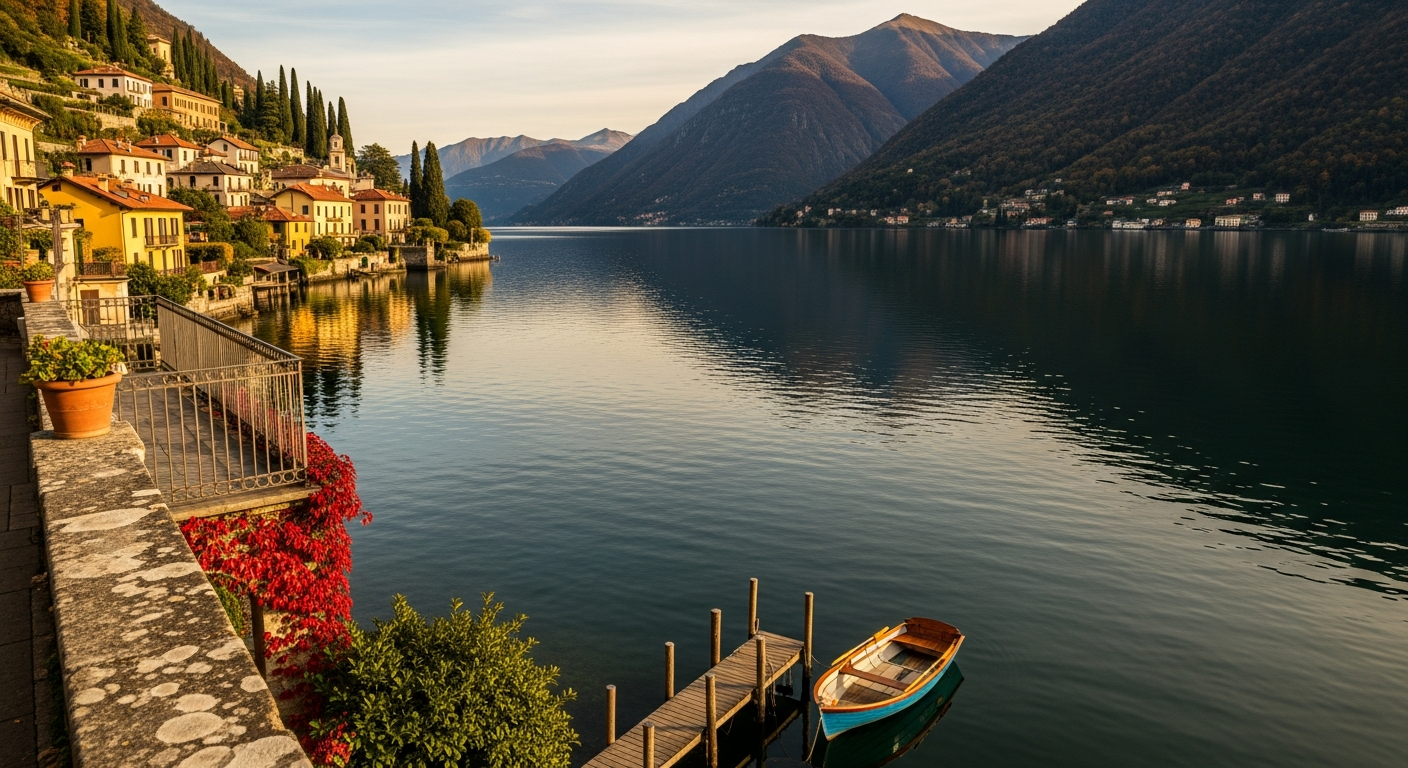
A practical 16-day Italy rail itinerary for over-60 couples, travelling Rome to Florence to Venice to the northern lakes in spring or autumn. Includes realistic AUD costs, sensible pacing and how the Trenitalia network compares with a rail pass.
Why does Italy by train suit over-60 couples so well?
Italy rewards people who slow down, and that is exactly what the train allows. You sit by a window, watch the country change from cypress hills to lakeside towns, and arrive in the centre of each city rather than out at an airport. For couples in their seventies, the train removes the two things many dislike most about European travel: hire cars and luggage hauling between far-flung terminals.
The other quiet advantage is pacing. A trip built around three or four bases, with train hops in between, means you unpack less and rest more. Two nights in a place is rarely enough at this age, so this itinerary uses longer stays and the days feel unhurried.
When is shoulder season in Italy, and why bother?
Shoulder season in Italy runs roughly mid-April to early June, and again September to mid-October. The weather is mild, the queues are shorter than the July crush, and accommodation costs less. For Victorian travellers, autumn in Italy lines up neatly with the Australian spring, so you leave a cool Melbourne and land in warm, settled weather.
Late September is close to ideal. Daytime temperatures sit in the low to mid 20s, the lakes are still swimmable for the brave, and restaurants have tables without a month's notice. Avoid August if you can; much of Italy goes on holiday and the heat is genuinely tiring.
Should you buy a rail pass or point-to-point tickets?
It is the most common question, and the honest answer is: for a fixed itinerary like this one, point-to-point tickets booked in advance usually win. Trenitalia's high-speed Frecce fares between major cities can be remarkably cheap if you book early. Rome to Florence can be around A$30 to A$60 per person when booked weeks ahead, rising to well over A$100 close to departure.
A Eurail Italy pass, sold through Rail Europe, costs roughly A$300 to A$450 per person depending on the number of travel days, and you still pay seat reservations on the fast trains. A pass earns its keep only if you are taking many long journeys or want full flexibility. For four or five planned hops, buy advance tickets directly from Trenitalia or its competitor Italo.
One practical note: on regional trains you may need to validate paper tickets in the green or yellow platform machines before boarding. High-speed e-tickets with a seat reservation do not need validating.
A sensible 16-day route from Rome to the lakes
Days one to four, Rome. Fly into Fiumicino and take the Leonardo Express train into the centre, about A$25 each. Give yourself jet-lag days here; the city is large and the cobbles are hard on the knees, so use taxis freely and rest each afternoon.
Days five to eight, Florence, reached in about an hour and a half by Frecciarossa. Florence is compact and walkable, an ideal base for a day trip to Siena or the Tuscan hills by regional train or a small-group tour.
Days nine to eleven, Venice, around two hours by fast train into Santa Lucia station, right on the Grand Canal. Three nights lets you see the city early and late when the day-trippers have gone.
Days twelve to sixteen, the northern lakes. Take the train to Milan, then on to Varenna or Como for Lake Como, or to Stresa for Lake Maggiore. End your trip somewhere calm and green, with ferry rides instead of museum queues, before flying home from Milan.
What will it cost in AUD?
For two people in shoulder season, a 16-day trip excluding international flights typically lands between A$7,000 and A$10,000 all up, depending on hotel standard. Return flights from Melbourne to Rome or Milan generally run A$1,800 to A$2,800 per person in shoulder season; book three to five months ahead.
Mid-range, comfortable double rooms cost around A$180 to A$300 a night in the cities and a little less by the lakes. Train hops across the whole route, booked early, come to perhaps A$250 to A$400 for the two of you combined. A relaxed lunch runs A$25 to A$45 each, and a good dinner with wine A$50 to A$80 each.
Solo travellers should note the single supplement falls mainly on accommodation, since most hotel rooms are priced per room. Expect to pay roughly 60 to 80 per cent of a couple's room cost on your own, so build that into your budget.
How do you keep it comfortable and accessible?
Pack light enough to lift your own bag up two or three train steps, because not every platform has level boarding. One wheeled case you can manage and a small day pack is plenty. Choose hotels within a short, flat walk of the station or a quick taxi, and confirm whether there is a lift if your room is not on the ground floor.
Italy's major stations have porter services and accessible assistance, which Trenitalia offers through its Sala Blu service if you book ahead. Reserve seats in carriages near the platform entrance, and allow generous connection times. Never book a hop that requires running.
Finally, take out travel insurance that genuinely covers your age and any pre-existing conditions, and register your trip details with Smartraveller before you go.
Key takeaways
- For a fixed Italy itinerary, advance point-to-point Trenitalia or Italo tickets usually beat a rail pass on cost.
- Shoulder season is mid-April to early June and September to mid-October; avoid August heat and crowds.
- Book three to four bases with longer stays to reduce packing and fatigue.
- Budget roughly A$7,000 to A$10,000 for two over 16 days, excluding international flights.
- Solo travellers pay the supplement mainly on accommodation, around 60 to 80 per cent of a couple's room cost.
- Use Trenitalia's Sala Blu assistance and pack a bag you can lift onto a train yourself.
Where to look and book
Indicative prices only — always confirm with the operator before booking.
Frequently asked questions
Is a Eurail pass worth it for Italy only?
Usually not for a fixed four or five hop itinerary. Advance point-to-point tickets are cheaper, and you still pay seat reservations on fast trains even with a pass.
How far ahead should I book trains?
High-speed advance fares typically open around 120 days before travel and rise as seats sell. Booking several weeks ahead saves the most.
Do I need to validate my train ticket?
Regional paper tickets must be validated in platform machines before boarding. High-speed e-tickets with a seat reservation do not.
Is Italy manageable for travellers with limited mobility?
Yes, with planning. Use Trenitalia's Sala Blu assistance, choose hotels near stations, confirm lifts, and allow generous connection times.
When should I fly to get the best shoulder-season fares from Melbourne?
Aim to book three to five months ahead for travel in May, June, September or early October, when fares and weather are most favourable.
Got a tip, a price update or a story from this route? The community would love to hear it.
Share your views on our Facebook page— Seniors and Solo Traveller Stories
More holidays

A Couple's Halong Bay and Hanoi Fortnight: Cruising Northern Vietnam at a Steady Pace, With Honest AUD Costs
Northern Vietnam suits over-60 couples who want a slower trip with comfort and good food. This 14-day plan pairs Hanoi…
A Tasmanian Food and Wine Trip for Two Over 60: Slow Days, Cellar Doors and the Spirit of Hobart
A gentle seven to ten day food and wine trip through Tasmania suits over-60 couples who want short drives, good meals…

Adelaide and the Barossa for Two Over 60: A Gentle Week With Real AUD Costs
Adelaide is one of Australia's most relaxed capitals for older travellers, and it pairs beautifully with a few unhurri…