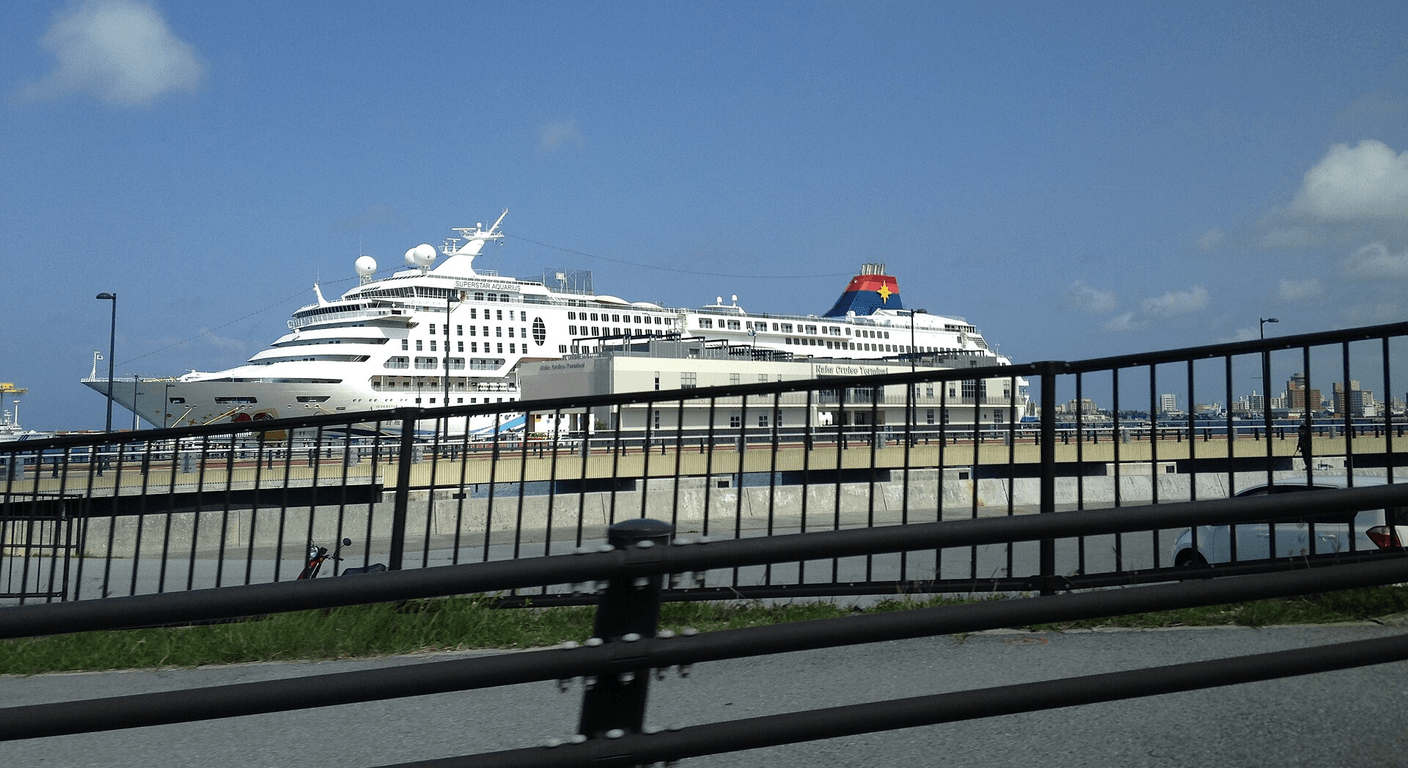
Japan and Asia cruises are among the most popular choices for Australian couples over 60, offering a structured way to cover a lot of cultural ground without repacking every night. This guide covers the key planning decisions — round-trip from Australia versus fly-cruise from Asian ports, the best seasons, what port-intensive itineraries really demand physically, and the practical detail around costs, insurance, and booking lead times. It is written for travellers who want honest guidance, not a brochure.
Why Japan and Asia cruises suit the over-60 traveller
For couples who have been curious about Japan and Southeast Asia but feel daunted by the logistics of navigating multiple countries independently, a cruise offers a genuinely practical solution. You unpack once, your accommodation moves with you, and the ship handles border formalities, luggage transfers, and the overnight sailing between ports. For travellers in their 60s and 70s who have grown accustomed to travelling well but want to reduce the friction, this structure has real appeal.
Japan in particular rewards the cruise format. The country's port cities — Yokohama for Tokyo, Kobe for Kyoto and Osaka, Nagasaki, Hiroshima, and the smaller calls on newer itineraries — are each distinct cultural destinations. A 14-night Japan-focused sailing can cover ground that would take weeks to replicate independently, and the ship provides a familiar, English-speaking base each evening. For Indian Australian travellers, many ships now offer vegetarian and vegan dining options as standard, and the onboard food culture on mainstream lines has improved considerably.
That said, a cruise is not a passive experience if you want to see anything meaningful. Port days in Japan typically run eight to ten hours, and the best cultural sites involve walking on uneven surfaces, stone paths, temple steps, and crowded narrow laneways. Being realistic about your preferred pace before you book will shape which itinerary and which shore excursion style suits you best.
Round-trip from Australia or fly-cruise from an Asian port: which makes more sense?
Round-trip cruises departing from Australian ports — typically Sydney, Brisbane, or Fremantle — do exist for Asia itineraries, but they are relatively rare and the transit days to reach Asian waters eat into the sailing time. A 28-night itinerary might include four to six sea days each way between Australia and Japan, which suits travellers who genuinely enjoy sea days and want to avoid flying. The trade-off is a longer overall trip and a higher total cost for the full sailing.
For most couples over 60, a fly-cruise arrangement makes better practical sense. You fly to a hub port — Singapore, Hong Kong, Yokohama (Tokyo), or Osaka — join the ship there, and the itinerary begins immediately in the region you have come to see. Singapore is the most common embarkation point for Southeast Asia and combined Japan itineraries; Yokohama or Osaka works well for Japan-focused sailings. Flying business class on a long-haul sector to Japan (roughly nine to ten hours from Melbourne or Sydney) is worth factoring into the budget for travellers who find economy seating difficult overnight.
The cost comparison matters. A fly-cruise package can look more expensive upfront, but when you account for the sea days you avoid, the cost per destination visited often comes out favourably. Travel agents who specialise in cruising can run these comparisons for you, and it is worth asking specifically about air-inclusive packages, as some lines offer negotiated airfares that are competitive with booking independently. Always check what is included: some fly-cruise packages include economy flights only, with an upgrade option at an additional cost.
Cherry blossom and autumn: the two seasons worth planning around
Japan's cherry blossom season, known as sakura, runs roughly from late March to mid-April depending on the year and the latitude. Sailings timed for this window are among the most sought-after Japan cruises, and for good reason — the transformation of parks, temple grounds, and riverbanks is genuinely unlike anything else in Asia. Kyoto's Maruyama Park, Tokyo's Ueno Park, and Hiroshima's Peace Memorial Park are all accessible from cruise ports and are at their most atmospheric during blossom season.
Autumn foliage, or koyo, peaks from late October through November and is arguably the better season for older travellers. The temperatures are cooler and more comfortable for walking — typically 12 to 20 degrees Celsius in central Japan — the summer humidity has passed, and the crowds, while still present at famous viewing spots, are somewhat lighter than during sakura season. The light in autumn also suits photography beautifully. Many experienced Japan travellers consider autumn the finest time to visit.
Both seasons book out well in advance. For cherry blossom sailings in March–April 2026 or 2027, planning 12 to 18 months ahead is realistic for popular ships and cabin categories. Autumn sailings for October–November have a slightly longer booking window but are also in high demand. Waiting until six months out and hoping for a good deal is a strategy that sometimes works for off-peak Asia sailings, but it carries real risk for these seasonal itineraries.
What port-intensive itineraries actually demand: an honest assessment
The phrase 'port-intensive' appears frequently in cruise marketing and it is worth understanding what it means in practice. A Japan itinerary with eight ports in fourteen nights means the ship is docked or at anchor most days, which sounds like excellent value for sightseeing. In reality, it also means there are few rest days built in. If you take a full shore excursion every day, you will cover a great deal of ground — and arrive home tired.
Shore excursions in Japan frequently involve significant walking. A half-day tour of Kyoto visiting Fushimi Inari Shrine, for example, involves climbing stone steps and uneven paths for several kilometres. Hiroshima's Peace Memorial Museum and Park requires steady walking on flat ground but is emotionally intensive. Many of Japan's most celebrated temples and gardens have gravel paths, steps without handrails, and limited seating. This is not a reason to avoid them, but it is worth discussing with your travel companion and being selective about which tours you book.
A practical approach for couples over 60 is to plan a mix: one or two full-day cultural excursions per port, combined with independent exploration of the immediate waterfront or a nearby market or garden at your own pace. Japan's port areas are often walkable and interesting in their own right — Nagasaki's Chinatown and waterfront, for instance, are within easy reach of the cruise terminal on foot. Most Japanese ports are well-organised for cruise passengers, with clear signage in English and accessible shuttle buses when the terminal is some distance from the city centre.
Heat, humidity, and health: what to prepare for in Southeast Asia
If your itinerary includes Southeast Asian ports — Ho Chi Minh City, Bangkok (via Laem Chabang), Bali, Penang, or Singapore — you will encounter heat and humidity that is more demanding than Japan's. Singapore sits at about one degree north of the equator and is consistently 30 to 33 degrees Celsius with high humidity year-round. Bali and Vietnam are similar. For travellers managing blood pressure, heart conditions, or mobility issues, the heat is a genuine planning consideration, not just a comfort issue.
Practical steps make a significant difference: scheduling shore excursions for early morning departures, carrying a small personal fan and electrolyte sachets, wearing loose natural-fibre clothing, and building in an air-conditioned stop — a cafe, a museum, a covered market — during the middle of the day. Many cruise shore excursions are already designed with this in mind, with the most exposed sightseeing done in the cooler morning hours. Independent travellers should apply the same logic.
Travellers managing dietary requirements will find Southeast Asia navigable with some preparation. Most large cities on cruise itineraries have strong vegetarian dining traditions — Indian vegetarian food is widely available in Penang and Singapore, and Buddhist vegetarian restaurants are common in Vietnam and Thailand. Informing the ship's dining team of your requirements at the start of the cruise ensures the galley can accommodate you at sea; ashore, a small translation card in the local language noting your dietary needs is a useful tool.
Cabin choice, single supplements, and what to budget
For couples, cabin choice comes down to a few honest trade-offs. An interior cabin saves a meaningful amount of money — often AUD 1,000 to 2,000 per person over the length of a cruise — and for travellers who spend most of their time ashore or in public spaces, the absence of a window matters less than it sounds. That said, on a port-intensive itinerary where the ship is often docked during daylight hours, a balcony or verandah cabin offers a pleasant place to watch the ship arrive in port, take an early morning cup of tea, and decompress after a full day ashore. Many regular cruisers consider it worthwhile.
For solo travellers — and there are many women travelling solo in the 60–75 age group — the single supplement remains a significant financial barrier on most mainstream ocean cruise lines. A single supplement typically adds 50 to 100 per cent to the per-person cabin rate, effectively doubling the cost. Some lines offer a 'solo guarantee' programme where they match solo travellers with a same-gender cabin sharer, eliminating the supplement, but availability is limited. River cruise operators and some smaller expedition lines have more progressive single supplement policies, and it is worth asking specifically about solo-friendly pricing when comparing lines.
As a rough and indicative guide to overall trip budgets — to be confirmed with current quotes — a couple sharing a verandah cabin on a 14-night Japan fly-cruise, including return economy airfares from Melbourne, basic travel insurance, and a moderate shore excursion budget, might expect to spend in the range of AUD 12,000 to 18,000 in total. Business class airfares, premium cabin categories, and extensive shore excursions will push that figure higher. These are indicative figures only; actual costs vary significantly by line, ship, season, and cabin category, and travellers should obtain current quotes before making any financial assumptions.
Travel insurance and planning lead times: what you need to know
Travel insurance for cruise travel over 60 deserves careful attention, not a last-minute online purchase. Standard domestic travel insurance policies often exclude cruise-specific risks — missed port departures, cabin confinement due to illness, emergency medical evacuation from a ship at sea, and the cost of joining the ship at the next port after a medical event ashore. You need a policy that explicitly covers cruising, and you need to declare all pre-existing medical conditions accurately and in full. Failure to disclose can void a claim at the worst possible time.
Several Australian insurers offer cruise-specific policies or cruise add-ons, and the comparison site Cover-More and the Insurance Council of Australia's consumer resources are useful starting points. For travellers with complex medical histories, a specialist travel insurance broker who works with older travellers is worth consulting. The cost of appropriate cover for a couple in their late 60s travelling to Japan and Asia for three to four weeks is likely to be in the range of AUD 600 to 1,500 depending on pre-existing conditions and the level of medical cover selected — indicative only, and worth obtaining multiple quotes.
On planning lead times: for cherry blossom and autumn sailings, 12 to 18 months is a sensible horizon for popular ships. For less seasonally sensitive Asia itineraries, six to twelve months allows a reasonable range of cabin choices. If you are planning to travel in a small group — two or three couples, for example — booking together early also allows you to secure adjacent or connecting cabins, which many groups find preferable. Your travel agent can hold cabin options briefly while the group confirms, and it is worth asking about group booking benefits, which sometimes include onboard credit or a complimentary cabin upgrade.
Key takeaways
- Fly-cruise from Singapore, Yokohama, or Osaka is generally more practical and cost-effective for Australian couples than a round-trip sailing from an Australian port.
- Japan's autumn foliage season (October–November) offers cooler temperatures and good sightseeing conditions, making it arguably the most comfortable time for travellers over 60.
- Port-intensive Japan itineraries involve significant walking on uneven surfaces and temple steps — selecting a mix of guided and self-paced shore excursions helps manage the pace.
- Single supplements on mainstream ocean cruise lines can add 50–100 per cent to the cabin cost for solo travellers; river cruise and expedition lines often have more flexible solo pricing.
- Travel insurance for a Japan and Asia cruise must explicitly cover cruise-specific risks and require full disclosure of pre-existing conditions — a standard domestic policy is unlikely to be sufficient.
- Cherry blossom sailings for March–April book out well in advance; planning 12 to 18 months ahead is realistic for popular ships and preferred cabin categories.
Where to look and book
Indicative prices only — always confirm with the operator before booking.
Frequently asked questions
What is the best time of year for an Australian couple over 60 to cruise Japan?
Autumn (October to November) is widely considered the most comfortable season for older travellers, with temperatures of roughly 12 to 20 degrees Celsius in central Japan, lower humidity than summer, and spectacular foliage at temples and gardens. Cherry blossom season (late March to mid-April) is equally rewarding visually but involves larger crowds and books out further in advance.
Is it better to book a round-trip cruise from Australia or fly to Asia and join the ship there?
For most couples over 60, a fly-cruise arrangement — flying to a hub port such as Singapore, Yokohama, or Osaka and joining the ship there — makes better practical sense than a round-trip from Australia. Round-trip sailings involve four to six sea-day transits each way, which extends the trip considerably. A fly-cruise puts you in the destination immediately and typically offers better value per port visited.
How much does a Japan cruise cost for an Australian couple in 2026?
As a rough and indicative guide only, a couple sharing a verandah cabin on a 14-night Japan fly-cruise, including return economy airfares from Melbourne, basic travel insurance, and a moderate shore excursion budget, might expect to spend in the range of AUD 12,000 to 18,000 in total. These figures are indicative only and vary significantly by cruise line, ship, cabin category, and season. Travellers should obtain current quotes from cruise lines or a travel agent before making any financial assumptions.
Do I need special travel insurance for a cruise to Japan and Asia?
Yes. Standard domestic travel insurance policies often do not cover cruise-specific risks such as missed port departures, cabin confinement due to illness, emergency medical evacuation from a ship, or the cost of joining the ship at the next port after a medical event ashore. You need a policy that explicitly covers cruising, and you must declare all pre-existing medical conditions accurately and in full. Obtaining multiple quotes from insurers who offer cruise-specific cover is strongly recommended.
Are Japan cruise itineraries suitable for travellers with mobility considerations?
Japan's cultural sites frequently involve stone paths, gravel gardens, and temple steps that can be challenging for travellers with limited mobility. Most cruise lines offer a range of shore excursion difficulty levels, including 'easy pace' tours designed for guests who prefer minimal walking on level ground. Discussing your specific mobility needs with the cruise line's accessibility team before sailing, and selecting shore excursions rated for low physical demand, allows travellers to enjoy Japan at a pace that suits them.
Got a tip, a price update or a story from this route? The community would love to hear it.
Share your views on our Facebook page— Seniors and Solo Traveller Stories
- Visit Victoria — Travel inspiration and planning
- Princess Cruises Australia — Japan and Asia itineraries
- Holland America Line — Asia cruises
- Scenic Luxury Cruises & Tours — Asia river and expedition cruises
- Cunard Line Australia — Asia and world voyage itineraries
- Cover-More Travel Insurance Australia
- Insurance Council of Australia — Travel insurance guidance
- Japan National Tourism Organization (JNTO) Australia
More cruises
Can You Cruise Round Australia and the South Pacific Without Boarding a Plane?
Princess Cruises sails from Australian ports including Melbourne and Sydney, which means over-60s in Victoria can join…
Cruising from Melbourne and Sydney: A Couple's Honest Guide to Sailing After 60
Ocean cruises departing Australian ports remain one of the easiest ways for over-60 travellers to see new places witho…
Is a Coral Expeditions Kimberley Cruise the Right Pace for Over-60 Travellers?
Coral Expeditions runs small-ship expedition cruises along Western Australia's Kimberley coast, carrying far fewer pas…