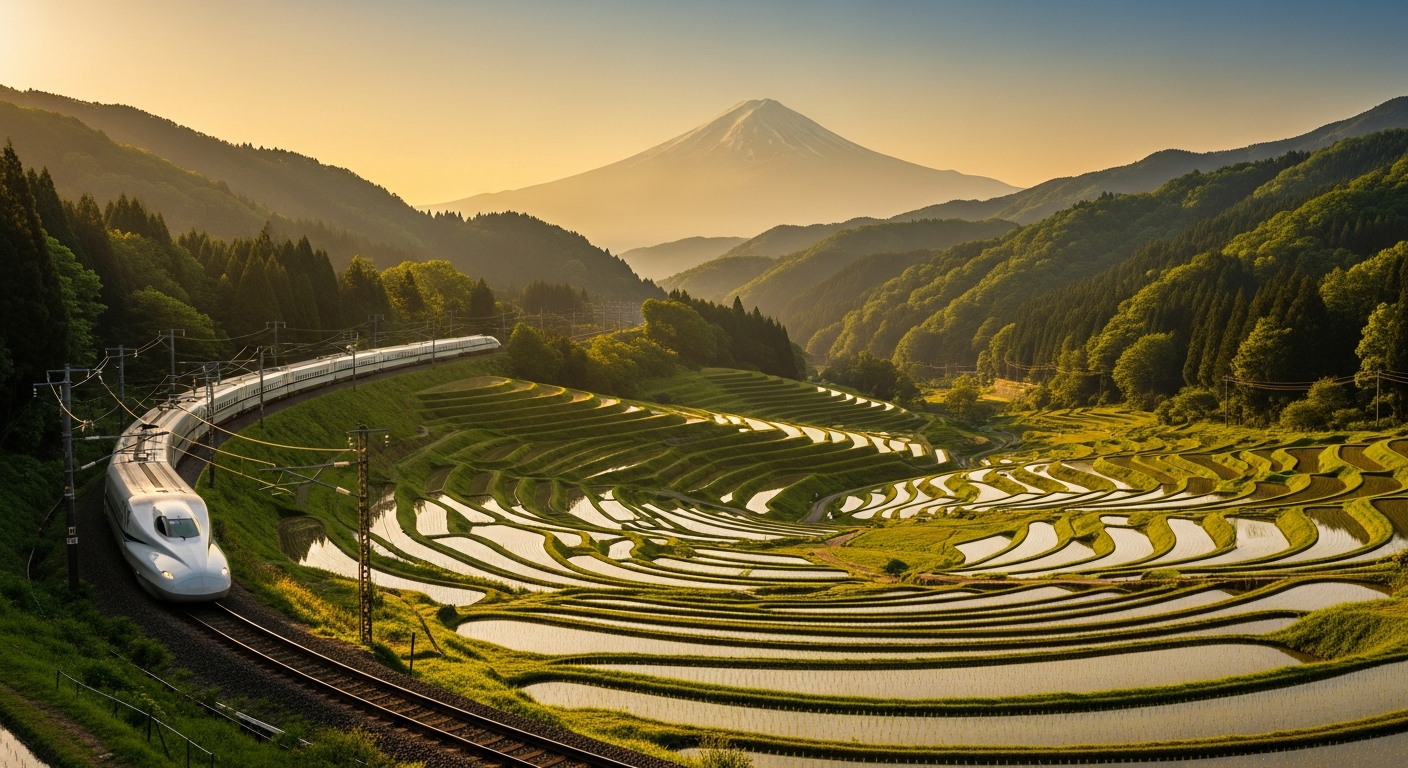
A practical guide to travelling Japan as a friends group over 60, using the Japan Rail Pass and IC cards. Covers realistic AUD costs, accessibility, seasons and how to pace a two-week loop without wearing yourselves out.
Why travel Japan as a friends group over 60?
There is something to be said for doing Japan with a handful of friends rather than alone or as a couple. The country is built for groups who move at a considered pace: clean trains, reliable timetables, and a culture that treats older travellers with genuine courtesy. A group of six between 63 and 70 can travel here without once feeling rushed or out of place.
Travelling as a group also softens the costs that sting solo travellers. Twin and triple rooms split well, taxis from the station become affordable when shared four ways, and you can hire a private guide for a day and barely feel it per head. Japan rewards people who plan together and then slow down once they arrive.
Is the Japan Rail Pass still worth it in 2026?
The Japan Rail Pass jumped in price in October 2023 and it is no longer the automatic bargain it once was. As of mid-2026 a 14-day ordinary adult pass sits at roughly A$830. To get your money back you need to be covering real distance, not just pottering around one city.
A loop like Tokyo to Kyoto, on to Hiroshima, back through Osaka and out to the Japanese Alps justifies it: those legs alone, bought individually, cost more than the pass. But if you plan to settle in one or two cities, skip the pass and tap an IC card, like Suica or ICOCA, on local trains instead. Do the sums on the official JR site before committing.
A practical tip: order the pass before you fly, allow a week for delivery, and reserve seats once you arrive. Reserved seats are free with the pass and worth it for a group of six who want to sit together.
How accessible is rail travel for older travellers?
Japan's rail system is among the easier ones in the world for older legs. Major stations have lifts and escalators, platforms are level with the train floor on the shinkansen, and station staff will help you with luggage if you ask. The catch is the suitcases.
Since 2020 you must reserve a spot in advance if you bring oversized luggage onto the shinkansen, so travel with medium cases and forward the rest. The takkyubin luggage forwarding service moves a bag between hotels overnight for around A$20 to A$30 each, which spares your back and lets you ride the train hands-free.
Walking is the real demand. Kyoto temples, Hiroshima's Peace Park and Tokyo's neighbourhoods involve plenty of it. Build in rest days and use taxis without guilt. A short cab ride that saves tired knees is money well spent.
Which season suits an over-60 group best?
Spring and autumn are the kindest. Late March to April brings the blossoms but also the crowds and higher prices. Late autumn, roughly mid-November, is quieter, when the maples turn, the air is crisp and the tour groups thin out. Both seasons sit in comfortable walking weather, generally 12 to 20 degrees.
Avoid the deep summer if you can. July and August are hot and humid, which is hard going when you are on your feet all day. Winter is fine for the cities and lovely for the snow country, but footpaths can be icy, so pack proper shoes if you go then.
What does two weeks in Japan actually cost in AUD?
Here is roughly what each person spends, sharing twin rooms. Return flights Melbourne to Tokyo in shoulder season run about A$1,200 to A$1,500. The 14-day rail pass is around A$830. Mid-range hotels average A$120 to A$160 per person per night on a twin share, so call it A$1,800 over a fortnight.
Food was a pleasant surprise. A bowl of ramen or a set lunch runs A$10 to A$18, and a proper dinner with a beer rarely topped A$45. Budget A$60 a day comfortably, which is A$840. Add entry fees, taxis, the odd guide and souvenirs at maybe A$700, and you land around A$5,500 to A$6,000 per person all up.
Solo travellers in the group pay more for single rooms, but the group structure means nobody faces a single supplement on tours, since the accommodation is booked independently.
How should you pace a two-week loop?
Resist the urge to cram. Tokyo four nights, Kyoto four, Hiroshima two, and the rest split between Osaka and a quieter stop in the Alps near Takayama works well. Three or four cities in a fortnight is plenty when you want to enjoy rather than endure.
Treat travel days as half days only, never pairing a long train leg with a big sightseeing push. Mornings are for the temples and gardens before the heat and the crowds, afternoons for a slow lunch and a rest, evenings for a shared meal. That rhythm keeps a group cheerful for the full two weeks, which is no small thing.
Key takeaways
- A 14-day JR Pass costs roughly A$830 in 2026 and only pays off if you cover real distance between cities.
- Use luggage forwarding at around A$20 to A$30 a bag to keep trains and station stairs manageable.
- Budget around A$5,500 to A$6,000 per person for two weeks on a twin share, including flights.
- Late autumn and spring offer the most comfortable walking weather for older travellers.
- Reserve shinkansen seats and oversized luggage spots in advance, especially for a group.
- Three or four cities in a fortnight is a comfortable pace for the over-60s.
Where to look and book
Indicative prices only — always confirm with the operator before booking.
Frequently asked questions
Do over-60s get a seniors discount on Japanese trains?
There is no general foreign seniors discount on JR trains. The JR Pass is the main saving for visitors, and it is the same price for all adults. Local IC cards charge standard fares.
Can we buy the JR Pass once we are in Japan?
Yes, you can now buy it in Japan, but it costs more than ordering online before you travel. Order ahead and allow about a week for delivery to your home address.
Is Japan easy to manage without speaking Japanese?
Yes. Signage in stations and on trains is in English, ticket machines have English settings, and translation apps cover most needs. Staff are patient and helpful.
How much walking is involved?
A fair amount, particularly around temples and gardens. Build in rest days, use taxis when tired, and choose comfortable shoes. The terrain itself is gentle in most cities.
Got a tip, a price update or a story from this route? The community would love to hear it.
Share your views on our Facebook page— Seniors and Solo Traveller Stories
More holidays
A Couple's Halong Bay and Hanoi Fortnight: Cruising Northern Vietnam at a Steady Pace, With Honest AUD Costs
Northern Vietnam suits over-60 couples who want a slower trip with comfort and good food. This 14-day plan pairs Hanoi…
A Tasmanian Food and Wine Trip for Two Over 60: Slow Days, Cellar Doors and the Spirit of Hobart
A gentle seven to ten day food and wine trip through Tasmania suits over-60 couples who want short drives, good meals…
Adelaide and the Barossa for Two Over 60: A Gentle Week With Real AUD Costs
Adelaide is one of Australia's most relaxed capitals for older travellers, and it pairs beautifully with a few unhurri…