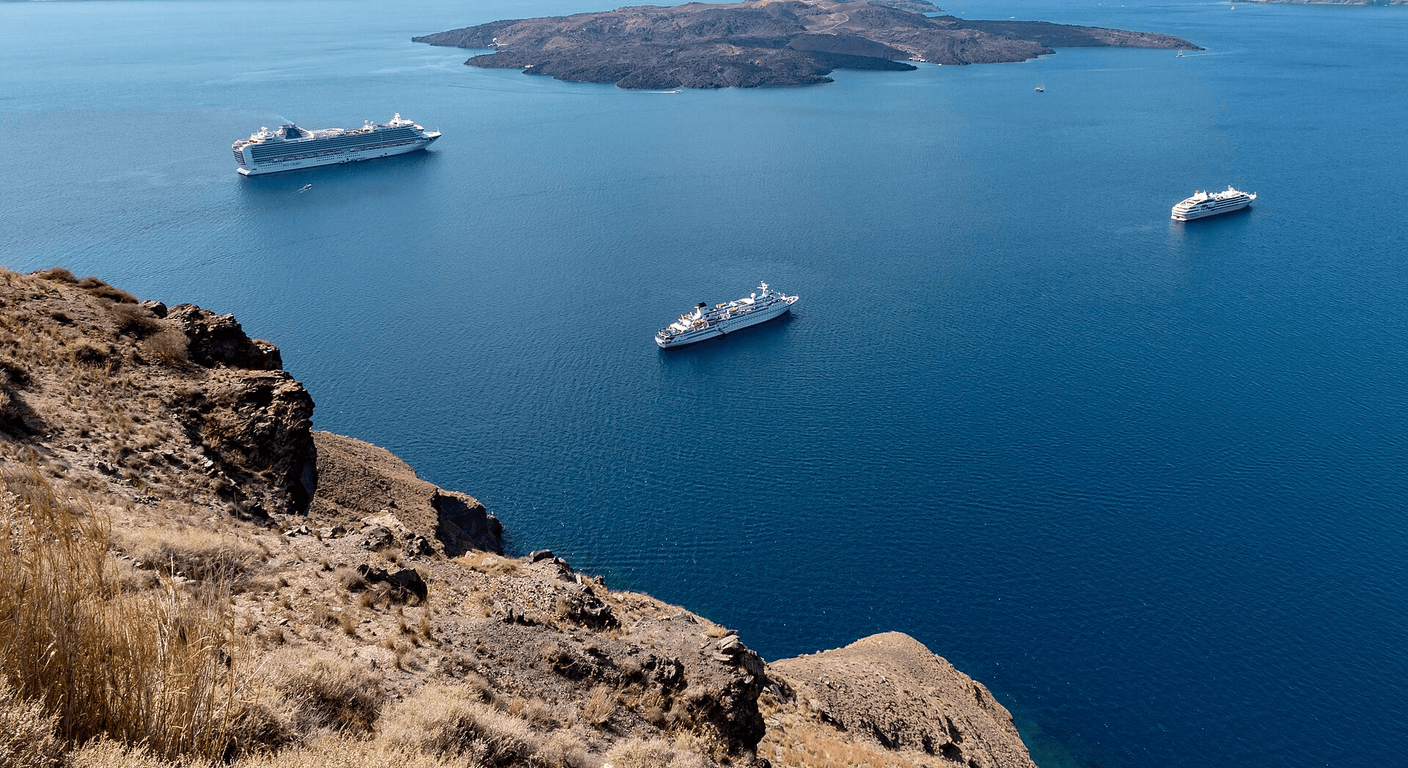
A Mediterranean cruise is one of the great travel ambitions for older Australians, and for couples with Greek or southern European heritage it carries an extra layer of meaning. This guide walks you through planning the whole journey from Victoria — the long-haul flights, the embarkation ports, eastern and western itineraries, what it costs, and how to pace yourselves so the trip actually feels like a holiday rather than an endurance event. It is written with over-60 couples in mind, with honest notes on heat, walking, jet lag, and the insurance decisions that matter most.
Why the Mediterranean still draws Australians over 60
For couples with Greek, Italian, Croatian, or Spanish heritage, a Mediterranean cruise is rarely just a holiday — it is often a return of sorts, a chance to show a partner the coastlines and islands that shaped family stories. For everyone else, it is simply one of the most varied and historically rich cruising regions on the planet, where a single week at sea can take you from a Roman amphitheatre to a Venetian canal to a whitewashed Cycladic village.
The cruise format suits older travellers well precisely because the logistics of moving between countries are handled for you. You unpack once, sleep in the same cabin each night, and the ship does the repositioning while you rest. Shore excursions can be as gentle or as ambitious as you choose. That said, the Mediterranean in peak summer is genuinely hot, the cobblestoned ports can be physically demanding, and the journey from Australia to the embarkation port is long and tiring. Planning carefully around those realities is what separates a trip you will talk about fondly from one that left you exhausted.
This guide focuses on the planning you do from home in Victoria — the decisions about routing, timing, cabin type, insurance, and pacing that will shape the experience long before you board the plane.
The long-haul flight: how do you get there without arriving wrecked?
From Melbourne, you are looking at roughly 22–28 hours of total travel time to reach a Mediterranean embarkation port, depending on your routing and layover. The main hubs are Dubai (Emirates), Abu Dhabi (Etihad), Doha (Qatar Airways), Singapore (Singapore Airlines), and Hong Kong (Cathay Pacific). Each offers onward connections to Barcelona, Rome (Fiumicino), Athens, or Venice. There is no single 'best' routing — it comes down to your preferred airline, your layover tolerance, and the fare on a given day.
For travellers over 60, the strongest advice from experienced cruisers is: do not fly directly to the ship. Build in at least two nights — ideally three — in the embarkation city before you board. Jet lag from Australia to Europe typically hits hardest on days two and three after arrival. If your ship departs the morning after you land, you are boarding exhausted, which sets a poor tone for the first few days at sea. A short pre-cruise stay lets you reset your sleep, get some gentle daylight walks in, and genuinely look forward to embarkation day.
Premium economy is worth budgeting for on this route if your finances allow. The difference in sleep quality and physical comfort over a 14-plus-hour leg is significant, and you will arrive in better shape. Business class makes the journey genuinely comfortable but adds substantially to the overall cost — roughly an indicative AUD 5,000–10,000 per person above economy fares, so weigh that against what you want to spend on the cruise itself. Always confirm current airfares with your travel agent or directly with airlines, as these figures shift considerably.
Which embarkation port suits you: Barcelona, Rome, Athens, or Venice?
Barcelona (Port of Barcelona) is one of the busiest cruise embarkation ports in the world and a genuinely wonderful city to spend a few days before boarding. The Gothic Quarter, the Eixample neighbourhood, and the waterfront are all walkable at a comfortable pace, though the city's hills and uneven pavement can be tiring. The port is well-organised and accessible. Barcelona suits western Mediterranean itineraries — think the Spanish coast, the Balearic Islands, the French Riviera, Corsica, Sardinia, and the Italian coast down to Naples.
Rome (Civitavecchia) is the port for ships calling Rome as a home port. Civitavecchia itself is about an hour by train from central Rome, which is worth factoring in if you plan to spend pre-cruise days in the city. Rome is a magnificent pre-cruise base but it demands a lot of walking on uneven ancient stone — pace yourselves, plan for midday rests, and consider a private driver for the Vatican rather than navigating the crowds independently. Civitavecchia suits both eastern and western Mediterranean itineraries.
Athens (Piraeus) is the natural home port for eastern Mediterranean itineraries — the Greek islands (Santorini, Mykonos, Rhodes, Crete), Turkey (Kusadasi, Istanbul), Croatia (Dubrovnik, Split), and Montenegro. For Greek Australians, Piraeus carries a particular weight; it is the port from which many family members departed for Australia in the 1950s and 60s, and arriving here by choice, as a traveller, can be quietly moving. Athens itself rewards a three-night pre-cruise stay — the Acropolis, Plaka, and the National Archaeological Museum are all worth unhurried time. Venice (Marghera or Chioggia, as the city centre terminal has faced restrictions) is a spectacular but logistically complex embarkation point; check current terminal arrangements with your cruise line well in advance, as Venice's cruise port situation has been evolving.
Eastern versus western Mediterranean: which itinerary fits your interests?
The eastern Mediterranean — Greece, Turkey, Croatia, Montenegro, Cyprus — tends to draw travellers with a personal or historical connection to those cultures, and it offers extraordinary ancient history, island scenery, and food. A typical 10–12 night eastern itinerary from Athens or Rome might call at Santorini, Mykonos, Kusadasi (for Ephesus), Rhodes, Crete, and Dubrovnik. For a Greek Australian couple, an itinerary that includes the islands of their family's origin — Kalymnos, Lesvos, Kefalonia, or wherever the connection lies — can be arranged through specialist cruise lines or by choosing an itinerary that calls at the relevant island, sometimes supplemented by an independent pre- or post-cruise stay.
The western Mediterranean — Spain, France, Italy, the Balearics, Corsica, Sardinia, Morocco — offers a different pace and aesthetic. It tends to be slightly more port-intensive and the cities (Barcelona, Marseille, Valletta in Malta, Naples) are large and varied. A 10–12 night western itinerary from Barcelona might include Palma de Mallorca, Marseille, Genoa, Naples (for Pompeii), Palermo, and Malta. Both eastern and western itineraries work well for couples; the choice really comes down to where your interests and connections lie.
Some itineraries cross between east and west — a 14-night sailing from Barcelona ending in Athens (or vice versa), for example — which suits travellers who want the breadth but means you will need to plan flights at both ends. These 'open-jaw' itineraries can be excellent value if you plan your flights carefully, and they avoid the repetition of returning to the same embarkation port.
When should you go: shoulder season, heat, and crowds
July and August in the Mediterranean are genuinely intense. Temperatures in Athens, Santorini, Dubrovnik, and Barcelona regularly exceed 35°C, and the most popular ports are extremely crowded — Santorini in particular can feel overwhelming when multiple ships are in port simultaneously. For travellers over 60, especially those with heart conditions, circulation issues, or limited heat tolerance, the peak summer months carry real physical risk. This is not alarmism; it is a practical consideration that experienced older travellers consistently raise.
May, June, and September are the sweet spots. Temperatures in May and early June are typically in the mid-20s to low 30s — warm, but manageable with sensible planning (early morning shore excursions, midday rest on board, light loose clothing, good hydration). September and October see crowds thin considerably, the sea is at its warmest for swimming, and the light is extraordinary. Late October can bring unsettled weather in the western Mediterranean, but the eastern Mediterranean often remains mild and calm well into November.
April is increasingly popular as cruise lines extend their seasons, and it can be lovely — particularly in Greece and Turkey — though some island businesses are still opening up and the sea is cooler. If you are flexible, late May or September offer the best combination of comfortable temperatures, manageable crowds, and a full season of open restaurants, museums, and ferry services.
Shore excursions: pacing yourselves honestly
Shore excursions on a Mediterranean cruise vary enormously in physical demand, and the descriptions in cruise line brochures do not always give you the full picture. 'Moderate walking' can mean two hours on cobblestones in full sun. 'Easy' can still involve steps, uneven surfaces, and distances that feel manageable at 50 but require more thought at 70. Reading excursion descriptions carefully, and contacting the cruise line's accessibility team if you have specific mobility needs, is time well spent before you book.
A practical approach for couples: alternate between a ship-organised excursion (which has the advantage of guaranteed return to the ship on time) and an independent half-day — a taxi to a village, a long lunch at a harbour taverna, a slow walk through an old town at your own pace. Some of the best port experiences come from simply sitting in a square with a coffee and watching life go by, which costs very little and demands nothing of your knees. In Greece especially, a good local taxi driver hired for a half-day can be worth every cent — they know the sites, speak English, and can adjust the pace entirely to you.
For the big archaeological sites — Ephesus, Pompeii, the Acropolis — go early. These sites open before the cruise ship crowds arrive, and the difference in temperature and crowd density between 8am and 11am is significant. If your ship docks at 8am and excursions depart at 9am, that timing works in your favour. If the ship docks at noon, consider whether the afternoon heat at an open archaeological site is what you want, and think about whether a cooler alternative that day might be wiser.
Cabins, costs, and the single supplement question
For couples on a Mediterranean cruise, a balcony cabin is strongly worth the additional cost over an interior or oceanview room. The balcony gives you a private outdoor space to sit with a morning coffee as the ship arrives into port, somewhere to decompress during sea days, and natural light — which genuinely helps with jet lag and sleep regulation. On longer voyages of 12 nights or more, the quality-of-life difference between a balcony and an interior cabin is substantial. Indicative balcony cabin fares vary widely by cruise line, ship, itinerary, and departure date — budget roughly AUD 4,000–8,000 per person as a broad planning range for a 10–14 night Mediterranean sailing, and confirm current pricing directly with cruise lines or a cruise-specialist travel agent.
The single supplement is relevant if one partner is travelling alone after bereavement, or if a friend is joining solo. Most cruise lines charge solo travellers a supplement of 50–100% above the per-person twin-share fare, which can make solo cruising expensive. Some lines — and this is worth researching specifically — offer dedicated solo cabins, solo-share programmes where you are matched with a same-gender cabin mate, or periodic reduced-supplement promotions. The Cruise Passenger website (cruisepassenger.com.au) is a useful Australian-focused resource for tracking these offers. If solo travel is your situation, raise it explicitly with any travel agent you use.
Beyond the cruise fare itself, budget for flights (substantial from Australia), pre- and post-cruise accommodation, travel insurance (see below), gratuities (some lines include these, others add a daily service charge of around USD 15–20 per person — confirm with your cruise line), shore excursions, drinks packages if not included, and incidentals. A realistic all-in budget for a couple doing a 12-night Mediterranean cruise from Victoria, including return flights in premium economy, might sit in the indicative range of AUD 18,000–30,000 depending on choices made — treat that as a rough planning figure only and build your own detailed estimate.
Travel insurance: the decision you cannot afford to get wrong
Travel insurance for Australians over 60 cruising in the Mediterranean is non-negotiable, and the details matter more than the premium. The key things to confirm before you purchase any policy: does it cover your pre-existing medical conditions (declare everything, without exception), does it include medical evacuation and repatriation from Europe, does it cover cruise-specific risks such as missed port departure, and what are the per-incident and per-trip limits for medical expenses. European medical costs, particularly if hospitalisation or evacuation is involved, can reach six figures in AUD.
Many standard travel insurance policies available in Australia have age cut-offs or significantly higher premiums and reduced cover for travellers over 70. Compare policies carefully using a specialist comparison service or speak to a broker who works with older travellers. The Australian Government's Smartraveller website (smartraveller.gov.au) has useful general guidance on travel insurance, and the Australian Securities and Investments Commission's Moneysmart site (moneysmart.gov.au) explains how to read a Product Disclosure Statement. Do not rely on credit card travel insurance as your sole cover — read the PDS carefully and confirm it covers your age and medical profile.
Purchase your insurance as soon as you pay your cruise deposit, not at the last minute. Doing so means you are covered if a medical event forces you to cancel before departure — a real consideration for travellers in their 70s. Some policies also cover 'cancel for any reason' as an add-on, which costs more but provides the broadest protection. Given the total cost of a trip like this, the insurance premium is a small fraction of what you stand to lose if something goes wrong.
Key takeaways
- Build at least two to three nights in your embarkation city before boarding — arriving rested makes a measurable difference to the first week of a Mediterranean cruise.
- May, June, and September offer the best balance of manageable temperatures, reasonable crowds, and full port services for travellers over 60.
- Eastern Mediterranean itineraries (Greece, Turkey, Croatia) and western itineraries (Spain, France, Italy) suit different interests — choose based on your personal and cultural connections, not just the price.
- A balcony cabin is worth the premium on a 10-night-plus Mediterranean voyage; the private outdoor space and natural light matter more than many travellers expect.
- Declare every pre-existing medical condition to your insurer and buy your policy the day you pay your cruise deposit — not the week before you fly.
- Shore excursions in peak-heat ports like Athens and Ephesus are best done early morning; alternating organised tours with independent half-days gives you the right mix of security and freedom.
Where to look and book
Indicative prices only — always confirm with the operator before booking.
Frequently asked questions
Which Mediterranean cruise embarkation port is easiest for Australians to reach?
Barcelona and Athens (Piraeus) are generally the most straightforward for Australians, with frequent direct connections from Melbourne via Dubai, Doha, Abu Dhabi, or Singapore. Both cities are excellent for a pre-cruise stay of two to three nights. Rome (using Civitavecchia port, about an hour by train from the city) is also well-served by flights. Venice is magnificent but check current cruise terminal arrangements with your line before committing, as the port situation has changed in recent years.
How hot is the Mediterranean in summer, and is it manageable for older travellers?
July and August temperatures in popular ports like Athens, Santorini, Dubrovnik, and Barcelona regularly exceed 35°C, sometimes reaching 40°C. For travellers over 60, particularly those with cardiovascular conditions or limited heat tolerance, this is a genuine health consideration. May, June, and September are substantially more comfortable — mid-20s to low 30s — and are the recommended travel window for older Australians doing a Mediterranean cruise.
What does a Mediterranean cruise cost for an Australian couple over 60, including flights?
As a rough planning guide only, a couple based in Victoria doing a 12-night Mediterranean cruise with return flights in premium economy, pre-cruise accommodation, insurance, excursions, and onboard gratuities might spend an indicative AUD 18,000–30,000 in total, depending on cabin category, cruise line, shoulder versus peak season, and the choices made along the way. Cruise fares alone in a balcony cabin typically run from around AUD 3,500–8,000 per person for a 10–14 night sailing. Always confirm current pricing directly with cruise lines and airlines.
Do cruise lines charge a single supplement, and how can solo travellers manage this?
Most major cruise lines charge solo travellers a supplement of 50–100% above the per-person twin-share price, which can make solo cruising expensive. Some lines offer dedicated solo cabins, solo-share programmes, or occasional reduced-supplement promotions. If you are travelling alone, ask explicitly about solo options when comparing cruise lines, and use Australian cruise-focused resources like cruisepassenger.com.au to track current deals.
What should older Australians look for in travel insurance for a Mediterranean cruise?
The policy must cover all pre-existing medical conditions (declare everything), include medical evacuation and repatriation from Europe, cover cruise-specific risks such as missed port departure, and have adequate medical expense limits — European hospitalisation and evacuation can cost six figures in AUD. Check age limits and premium structures carefully, as many standard policies restrict cover for travellers over 70. Buy the policy the day you pay your cruise deposit so you are covered for cancellation due to illness before departure.
Got a tip, a price update or a story from this route? The community would love to hear it.
Share your views on our Facebook page— Seniors and Solo Traveller Stories
- Smartraveller — Australian Government travel advice for Greece, Spain, Italy, Croatia
- Princess Cruises Australia — Mediterranean itineraries
- Celebrity Cruises Australia — Mediterranean sailings
- MSC Cruises Australia
- Cruise Passenger — Australian cruise news and solo supplement information
- ASIC Moneysmart — Travel insurance guide
- Visit Victoria — Travel planning resources
More cruises
Can You Cruise Round Australia and the South Pacific Without Boarding a Plane?
Princess Cruises sails from Australian ports including Melbourne and Sydney, which means over-60s in Victoria can join…
Cruising from Melbourne and Sydney: A Couple's Honest Guide to Sailing After 60
Ocean cruises departing Australian ports remain one of the easiest ways for over-60 travellers to see new places witho…

Is a Coral Expeditions Kimberley Cruise the Right Pace for Over-60 Travellers?
Coral Expeditions runs small-ship expedition cruises along Western Australia's Kimberley coast, carrying far fewer pas…